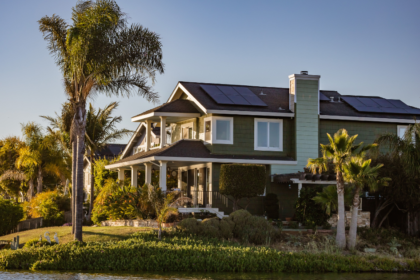

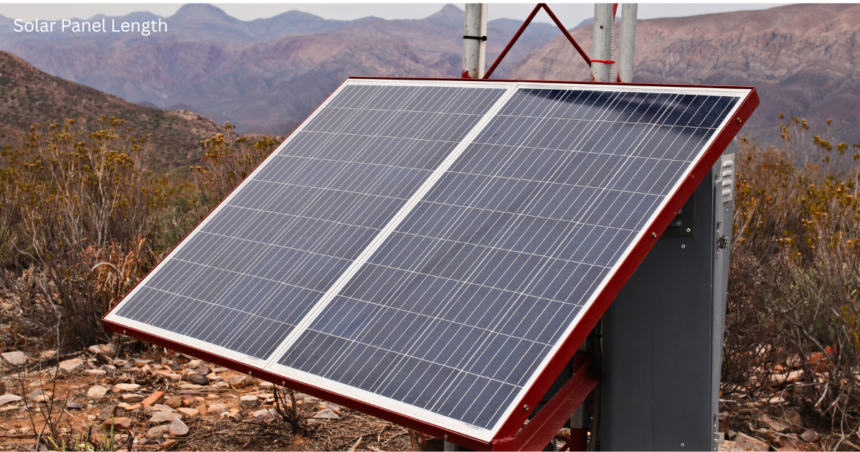
When my neighbor asked about putting solar panels on his roof,Solar Panel Length I told him to start with the basics: shapes, sizes, and intended uses. Residential panels pack 60 PV solar cells into a 10 by 6 grid pattern. Dimensions vary slightly by manufacturer, but most home solar panels measure about 5.4 feet wide by 3.25 feet long, giving roughly 17.6 square feet with a depth under two inches.
Roof Space and Orientation
Available sunny roof area is often the real limiting factor, especially for household solar systems in urban areas. One residential solar panel takes up about 1.7 m2, and a 6.6 kW system needs roughly 29 to 32 m2 of roof space, depending on rated capacity. Panels can sit in portrait or landscape orientation to maximize available roof space, and SunSPOT can show the number of panels your roof can hold.
How to Calculate Solar Panel Dimensions
Matching total solar panel dimensions to your energy-generating capacity tells you if a PV installation fits your roof or property. Most home solar panel systems are sized so capacity matches electricity consumed on-site annually. Home PV systems typically run 3 kW to 15 kW, with most residential installations between 6 kW and 11 kW.
Home solar panels are rated 300 to 450 watts. Here’s how solar panel dimensions scale: a 4 kW system needs 11 panels at 350W (194 sq ft), 10 at 400W (176 sq ft), or 9 at 450W (158 sq ft). A 7 kW system needs 20 panels (352 sq ft), 18 (317 sq ft), or 16 (282 sq ft). An 11 kW system needs 31 panels (546 sq ft), 28 (493 sq ft), or 25 (440 sq ft).
Installation Rules and System Size Solar Panel Length
Solar panels must be spaced horizontally and row-to-row per local building codes, with proper lengths from ridges, edges, chimneys, dormers, vents, and roof obstructions. Pair high-efficiency panels with microinverters and a solar installer familiar with local building regulations. System size the rooftop solar system’s total power-generating capacity is measured in kilowatts (kW), where 1000 Watts = 1 kW. A typical home solar system with 19 x 350 Watt panels equals 6,650 Watts, or 6.65 kW.
How Much Do Solar Panels Weigh?
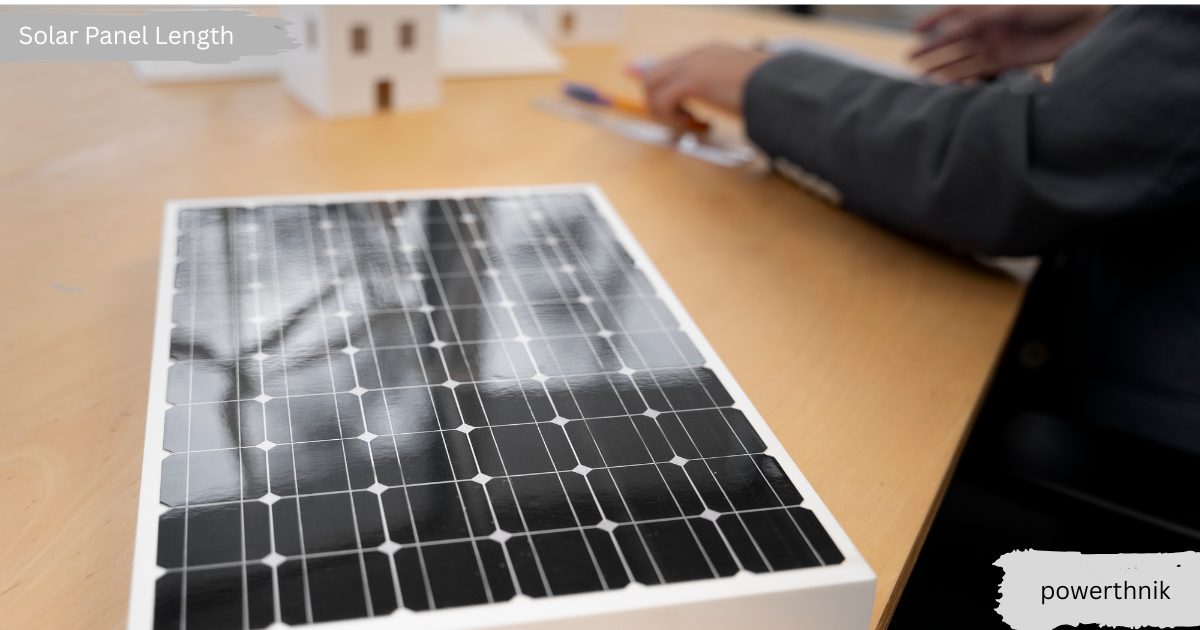
Solar panel weight varies by technology and brand, but most home solar panels weigh 40 to 50 lbs. Solar cell count matters 72-cell commercial installation panels weigh more than residential 60-cell ones due to size and material costs. Frame material is usually lightweight aluminium alloy for easy transportation.
The glass cover adds the most panel weight, especially on weather resistant panels. Add solar mounting hardware, and total mass runs two to three pounds per square foot of installation area.
Calculating Total System Weight
Multiply number of panels by individual weight, then add mounting equipment and rooftop components. Twenty 40-pound solar panels equal 800 lbs before wiring and microinverters. Using 3 lbs per square foot: a 4 kW system (10 panels, 400 lbs, 176 sq ft) totals 528 lbs; 7 kW (18 panels, 720 lbs, 317 sq ft) totals 951 lbs; 11 kW (28 panels, 1,120 lbs, 493 sq ft) totals 1,479 lbs.
Roof Assessment
Most rooftops handle this weight fine, though rigid solar panels can be too heavy for mobile homes, and older roofs may need structural reinforcements. In the United States, you must submit roof’s structural details for a solar building permit get professional help for safety, legality, and project efficiency.
Key Takeaways on Size and Weight
Size and weight depend on total energy-generating capacity, brand choices, mounting materials, and system design decisions. Solar panel weight rarely blocks residential rooftops; reinforcements fix most cases. Space on your roof or property usually limits number of panels more than local building or electrical regulations do. An Enphase Home Energy System with high-efficiency PV equipment is a strong starting point.
Inverter Sizing
Solar Panel Length systems often pair an inverter smaller than panel output a 6.6 kW solar system with a 5 kW inverter is common, since panels rarely hit full rated capacity, adding value and economic sense. Check inverter specifications with your solar retailer: if system size exceeds the inverter manufacturer’s specifications, you lose the Australian Government’s Small-scale Renewable Energy Scheme rebate.
Electricity Usage and Pricing
Bigger electricity use means a bigger solar system. Check your electricity bill for average daily use in kilowatt-hours (kWh) over the billing period (90 days). Australian homes use 11 23 kWh per day, varying by summer and winter. A smart meter records electricity usage every 15 or 30 minutes ask your distribution network service provider for interval data. Feed this into SunSPOT for a better system size estimate.
Think ahead: electric appliances, electric hot water, air-conditioning, home extensions, or an electric vehicle all raise electricity usage. On pricing, a bigger solar system pays off more if your electricity retailer charges high rates or your feed-in tariff is generous. Test scenarios with SunSPOT using your electricity bills.
Climate and Network Limits
Climatic conditions affect output a 6.6 kW system generates about 26 kWh in Sydney, 28 kWh in Brisbane, and 23 kWh in Hobart due to less annual sunshine. Hot temperatures slightly lower generation.
Your distribution network service provider sets network limitations based on phase: single-phase supply (240V, 3 wires) or three-phase supply (5 wires). A connection limit of 10 kW per phase allows a 10 kW inverter single-phase, or up to 30 kW three-phase.
SunSPOT System Size Estimate
SunSPOT, built by solar engineers from the University of New South Wales and Australian Photovoltaic Institute, gives a free rooftop solar system size estimate without pushing brands or sharing details with third parties. It factors roof area, shading impacts, electricity use, feed-in tariff, region’s climate, and budget, returning suggested system size, installed system cost with rebates, annual bill savings, payback period, and carbon emissions avoided.
How Solar Panels Work
Solar panels are photovoltaic light and voltage. A solar cell under sunlight generates voltage; reversed with a power supply, it emits infrared light visible only through a camera without its filter. Photons hit the cell, knocking an electron loose and leaving a hole the photovoltaic effect. The electron moves to the top layer, attracted to the hole like a magnet, flowing through a wire to recombine.
An array is multiple strings of solar modules; each module holds multiple solar cells. A basic solar cell has a metal conductive plate (positive electrode), a silicon layer (silicon boron mixture and silicon phosphorus meeting at the PN Junction), an anti-reflective coating, a metal grid (negative electrode with fingers and bus bar).
Voltage, Current, and Connections
Small modules (36 cells) produce 18–19.8 volts for 12V batteries in off-grid systems. Residential setups use 60 or 72 cell modules; commercial uses up to 96 cells. In series, voltage adds while current stays fixed 60 cells at 0.5 volts and 8 amps gives 30 volts, 8 amps, 240W. Four modules in series = 120 volts, 8 amps, 960 watts. Four in parallel = 30 volts, 32 amps, also 960 watts.
Storage, AC/DC, and the Grid
A solar fan runs only in light; a battery stores energy for night. A charge controller prevents overcharging, protecting the battery while powering the load. Solar panels produce DC electricity electrons flow one direction, like water in a river, powering DC motors and USB devices. Inverters convert DC to AC for household devices, where electrons alternate like a tide.
In grid-connected systems, panels feed an inverter powering AC loads; excess energy sells back via net metering. Battery banks store excess power for night use or outages. Solar farms combine many panels into a transformer substation before grid export.
Sun Position, Orientation, and Tilt
The sun moves east to west daily and sits higher in summer, lower in winter (northern hemisphere). Panels work best perpendicular to the sun like a torch beam spreading when tilted. Installers check altitude, azimuth, latitude, shading, and tilt angle using software like PV case with 3D topographical data, producing shade analysis, cabling plans, and construction documentation for commercial and utility-scale projects.
Types of Solar Cells
Polycrystalline cells show blue flakes separate silicon crystals with boundaries that create defects, lowering efficiency to 13–17%. Made from melted silica sand and carbon, formed into ingots, then thin sheets.
Monocrystalline cells are black or dark blue with no visible crystals, formed from one giant crystal via a seed crystal in a crucible. Efficiency runs 15–19% but costs more.
Thin film versions are flexible, used on curved roofs, vans, and boats, with shorter lifespan. Amorphous silicon (brown color, random structure) is cheap but only 5–8% efficient.
Efficiency and Light Absorption
Efficiency measures energy converted to electricity. Solar Panel LengthSunlight spans gamma rays to radio waves, with usable energy in ultraviolet, visible, and infrared ranges. Silicon needs 1.1 electron volts to free an electron matching a wavelength of 1,127 nanometers. Only about 30% of energy converts to electricity; the rest is lost to reflection, dust, heat, and inverter and wire losses.
The PN Junction Explained
Silicon atoms have 14 electrons, four in the outer shell, needing eight for stability. Adding phosphorus (five electrons) creates a free electron; adding boron (three electrons) creates a hole. Where these layers meet forms the PN Junction negative (electrons) and positive (holes) sides create a depletion region and electric field. Light frees electrons, which flow through a wire as current, generating DC electricity.
Conclusion
Solar Panel LengthGetting solar panel length right means balancing dimensions, weight, roof space, and system size against your electricity needs. From 60-cell residential panels to 72-cell commercial ones, every measurement square footage, wattage, voltage, and efficiency feeds into one goal: a system that fits your roof and powers your home reliably for 20 years or more.