
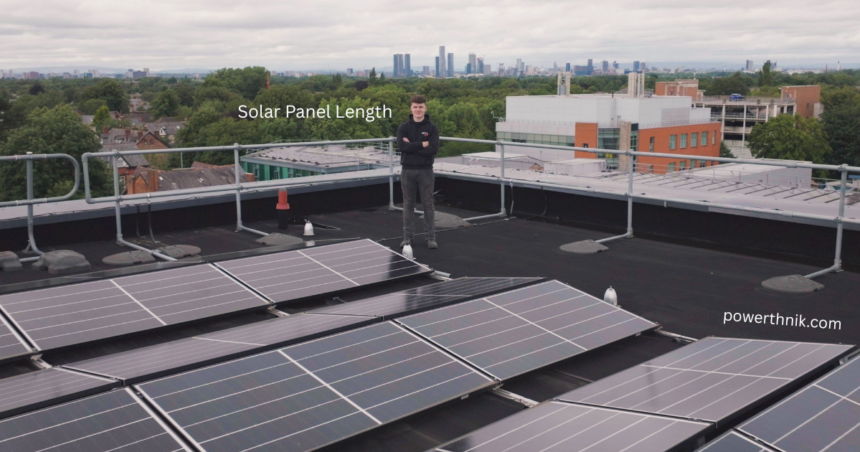
When choosing solar panels for a UK home, Solar Panel Length is an important measurement to consider. The size of each panel affects how many modules can fit on your roof, how the system is arranged, and how much electricity it may generate. However, panel length should always be considered alongside width, efficiency and wattage.
Most modern residential solar panels in the UK are around 1.6 to 1.8 metres long, although dimensions vary between manufacturers and models. In this guide, we explain standard solar panel sizes, how panel dimensions affect roof layouts, and how to estimate the number of panels your UK roof could accommodate.
For many UK homes, modern solar panels are roughly 1.7 to 1.8 metres long and about 1 metre wide. Larger panels are also available, particularly for commercial buildings and larger roof areas. The best size depends on the property rather than simply choosing the longest panel available.
What Does Solar Panel Length Mean?
Solar panel length refers to the longest physical side of the panel, normally measured from one end to the other. Manufacturers usually provide dimensions in millimetres, although the measurement is often converted into metres when planning a domestic installation.
Length works together with width to determine the panel’s overall surface area. For example, a panel measuring approximately 1.75m by 1.1m occupies around 1.9 square metres before allowing for installation clearances.
This measurement matters because it influences:
- How many panels can fit across a roof
- Whether panels can be installed vertically or horizontally
- The total roof area required
- The arrangement of mounting rails
- The potential capacity of the complete solar system
A longer panel is not automatically a better panel. A smaller model with higher efficiency may produce more electricity from each square metre of roof.
Typical Solar Panel Length in the UK
There is no single standard size used for every UK solar installation. Panel dimensions vary between manufacturers and models, but domestic panels generally fall within a fairly predictable range.
Most residential models are approximately 1.6 to 1.8 metres long and around 1 metre wide. Some newer high-output panels can be slightly larger, particularly when they use larger cell formats or additional cells to increase their power rating.
The physical size should therefore be checked on the manufacturer’s specification sheet rather than estimated from wattage alone.
Residential Solar Panels
Domestic solar panels are designed around the limited and sometimes awkward roof space found on UK houses. A typical panel may be around 1.7m long and close to 1m wide, although exact dimensions differ considerably between models.
Many current residential panels offer power ratings of roughly 350W to more than 450W. Higher wattage does not necessarily mean the panel is dramatically longer; improvements in cell technology and efficiency allow manufacturers to increase output without simply increasing the footprint.
This is particularly useful on terraced houses and other properties where roof space is restricted.
Commercial Solar Panels
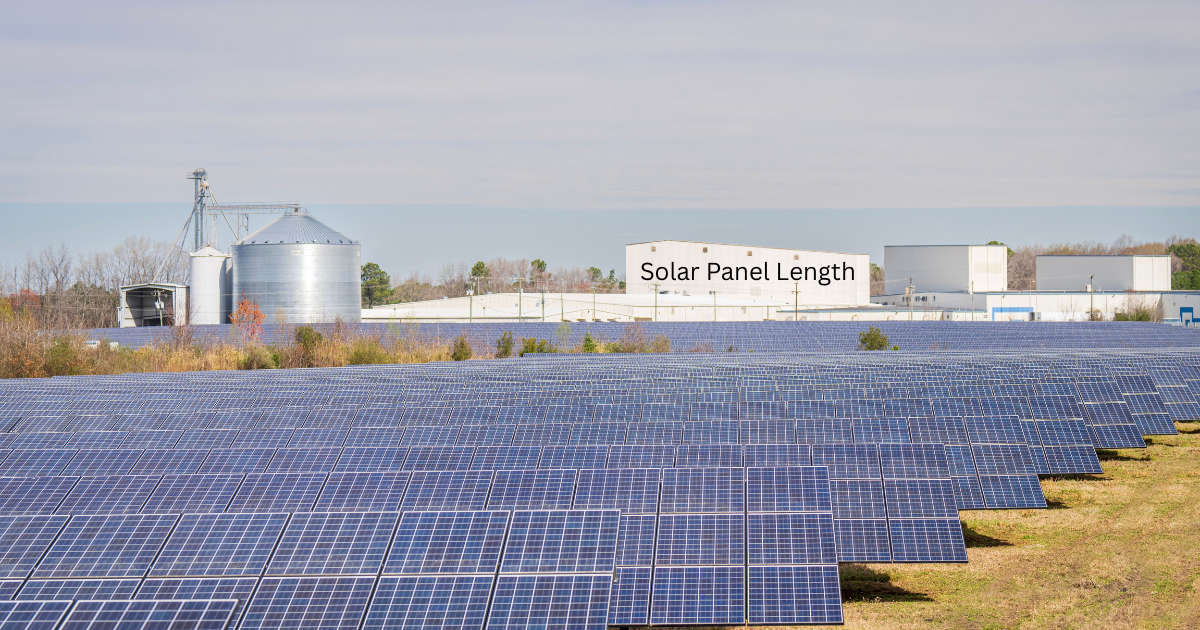
Commercial solar panels are often larger because warehouses, factories, agricultural buildings and other commercial properties usually have more open roof space.
Some commercial modules can exceed 2 metres in length and may be wider than standard domestic panels. Their larger surface area allows more solar cells to be incorporated into each module, potentially increasing the output of every individual panel.
Using larger modules can also reduce the number of panels required for a particular system capacity. That can simplify some aspects of installation, although the final choice depends on roof structure, access, mounting equipment and the installer’s design.
Why Solar Panel Length Matters
The physical dimensions of a solar panel become especially important when a roof has limited usable space.
Imagine a roof with several chimneys, skylights and ventilation outlets. A panel may technically fit within the overall roof dimensions but still be unsuitable because its length leaves insufficient clearance around an obstruction.
Panel dimensions also affect the number of modules that can be placed in a row. Changing the orientation from portrait to landscape can sometimes make a significant difference to the final layout.
For this reason, installers normally consider the complete roof geometry rather than looking at panel length in isolation.
Solar Panel Length vs Width
Length is only one part of the panel’s footprint. Width can be equally important when calculating how many modules will fit.
A panel measuring 1.75m × 1.1m has a different installation footprint from one measuring 1.65m × 1m, even if both have similar power ratings.
When comparing panels, look at:
Length: affects the vertical or horizontal space required.
Width: determines how much roof width is consumed by each module.
Total area: gives a better indication of how much roof surface the panel occupies.
Wattage: shows the nominal electrical capacity of the module.
Efficiency: indicates how effectively the panel converts available sunlight into electricity.
A useful comparison is therefore watts per square metre, rather than panel length alone.
How Roof Shape Affects Panel Layout
Two houses with roofs of exactly the same area may accommodate very different numbers of solar panels.
A simple rectangular roof provides relatively straightforward installation space. A roof containing dormer windows, chimneys, skylights or multiple roof sections can lose a considerable amount of usable area.
The following factors are particularly important:
Roof Orientation
South-facing roofs are traditionally attractive for solar generation in the UK, but east- and west-facing roofs can also provide useful electricity generation.
Orientation influences expected generation, but it does not necessarily determine whether a roof is suitable.
Roof Pitch
The angle of the roof affects both the positioning of the panels and their exposure to sunlight. UK homes have a wide variety of roof pitches, so installers need to assess the individual property.
Chimneys and Roof Windows
Obstructions reduce the continuous area available for panels. They can also create shadows that affect nearby modules.
Roof Edges
Panels should not normally be placed right against the roof boundary. Appropriate clearances are needed for installation, maintenance and the mounting system.
Roof Structure
The roof must be capable of supporting the proposed equipment. The installer may need to consider the roof covering, structural condition, fixing locations and wind loading before approving the layout.
How Much Space Does One Solar Panel Need?
A modern domestic panel can occupy around 1.7 to 2 square metres of physical panel area, depending on its dimensions.
However, the actual roof area required is greater than the panel’s dimensions alone suggest. Space may be needed between modules and around parts of the roof, while mounting equipment and access considerations can also influence the layout.
For example, a roof that appears large enough for ten panels on paper may accommodate fewer once roof windows, chimneys and required clearances are considered.
That is why simple multiplication of roof length and width should only be treated as an initial estimate.
How Many Solar Panels Can Fit on a UK Roof?
The answer depends on both the available roof area and the dimensions of the chosen panel.
As a simplified example, suppose a property has 30 square metres of potentially usable roof area. If each panel occupies approximately 1.8 square metres, the theoretical calculation would suggest around 16 panels.
But this does not mean 16 panels will necessarily fit.
The final number may be reduced by:
- Chimneys
- Skylights
- Dormers
- Roof vents
- Edge clearances
- Panel orientation
- Shading
- Roof shape
- Mounting requirements
A professional survey is therefore much more reliable than an area-only calculation.
Does a Longer Solar Panel Produce More Electricity?
Not necessarily.
A longer module may contain more cells and have a higher rated output, but physical size alone does not determine generation.
Two panels can have different dimensions while delivering similar output. Likewise, a larger panel can have lower efficiency than a smaller premium model.
For a roof with limited space, power density can be more useful than simply selecting the largest available module. A high-efficiency panel can produce more power from the same roof area.
This is one reason homeowners should compare panel dimensions, wattage and efficiency together.
How to Choose the Right Solar Panel Length
Start by measuring the available roof rather than choosing a panel first. Identify the usable sections and mark major obstructions such as chimneys and roof windows.
Next, compare the dimensions of several suitable panels. Check whether their length and width work better in portrait or landscape orientation.
Finally, compare their rated power and efficiency. A panel that is slightly smaller but more efficient could provide a better solution when roof space is limited.
For a UK installation, an experienced installer should confirm the final design after assessing the actual property.
Solar Panel Length and System Size
Panel dimensions also influence the number of modules needed to reach a particular system capacity.
For example, a 4kW system could be achieved using approximately ten 400W panels. A higher-output module might reach the same capacity with fewer panels.
Fewer panels can be helpful when roof space is restricted, but the modules may be larger. The installer therefore needs to balance individual panel dimensions against the available roof area.
The same principle applies to larger systems designed for homes with electric vehicles, heat pumps or higher electricity consumption.
Measuring Your Roof Before Installation
You can make an initial estimate by measuring the roof’s usable length and width. However, do not assume the entire roof surface can be covered.
Create a rough plan showing:
- Overall roof dimensions
- Chimney locations
- Skylights and roof windows
- Dormers and other projections
- Roof edges
- Areas affected by potential shading
This information can help you understand the approximate number of panels possible.
The installer should then carry out a detailed assessment before the final panel layout is approved.
UK Solar Panel Standards and Installer Checks
When installing solar panels in the UK, homeowners should look beyond panel dimensions and check the credentials of the installer.
MCS certification is particularly important because it is associated with eligibility for certain UK renewable-energy schemes and helps homeowners identify certified installers.
It is also sensible to check the panel manufacturer’s warranty, product specifications, efficiency rating and expected performance.
Support schemes and export arrangements can change, so current eligibility should always be confirmed before making financial assumptions about a solar installation.
Final Thoughts on Solar Panel Length
Solar Panel Length is an important part of solar system planning, but it should never be considered on its own. A panel’s width, efficiency, wattage and total surface area can be just as important when deciding whether it is suitable for a particular UK roof.
Most domestic panels are broadly within the 1.6–1.8 metre length range, while larger commercial modules can be considerably longer. The right option depends on the property’s roof shape, available space, electricity requirements and installation conditions.
Rather than choosing the longest or highest-wattage panel, compare the complete specification and have the roof professionally assessed. A well-planned layout can make better use of limited space and help the finished solar system deliver strong long-term performance.
Frequently Asked Questions
What is the average Solar Panel Length in the UK?
Most domestic solar panels are approximately 1.6 to 1.8 metres long, although exact dimensions vary between manufacturers and models.
Are longer solar panels better?
No. Length does not automatically indicate better performance. Panel efficiency, wattage, cell technology and roof suitability should all be considered.
How much space does a solar panel take up?
A typical domestic module occupies roughly 1.7 to 2 square metres, depending on its dimensions. Additional roof space may be required for clearances and mounting arrangements.
Can solar panels be installed on a small UK roof?
Yes. Smaller roofs can still be suitable for solar. High-efficiency panels may be particularly useful because they can provide more output from limited available space.
Should I choose panels based only on length?
No. Compare length, width, efficiency, power output, warranty and physical roof requirements together. A professional roof survey is the best way to determine which panel size is appropriate.
What is more important: panel size or efficiency?
Both matter, but efficiency becomes especially important when roof space is limited. A compact, high-efficiency panel may generate more electricity from a restricted roof area than a larger, less efficient model.