If you have ever opened a laptop pack, a torch or a cordless drill, you have probably held a cylindrical lithium-ion cell without knowing it. I have tested these cells on my workbench for years, and the battery 18 650 is still the one I trust most for daily projects. Shoppers in the UK and the United States ask about it every week, mostly because fake labels and wild capacity claims fill the market. This guide covers seven key facts, from size and chemistry to buying and safety.
What Is a Battery 18 650 Cell?
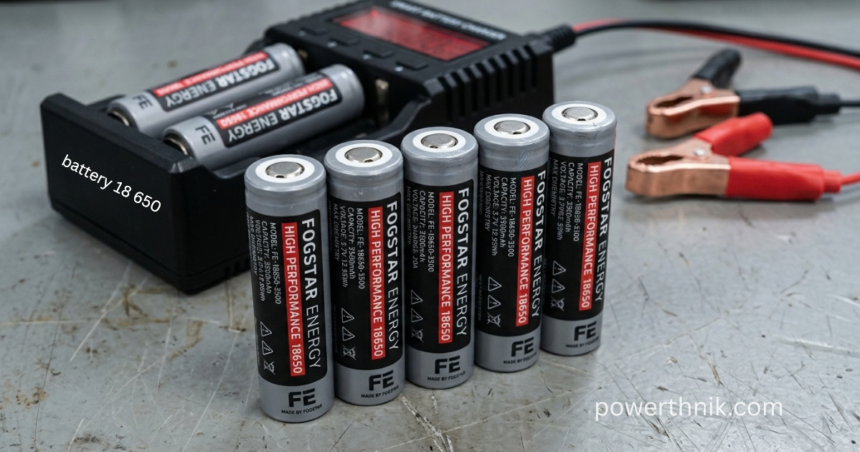
In everyday talk, a battery 18 650 means a round lithium-ion cell that you can recharge many times, and its strange name is just a code for its size. The first two digits mean 18 mm across, and the next three mean 65.0 mm long, while the zero shows a round shape. Sony launched the first commercial version in 1991, and brands like Samsung, Molicel and Panasonic now make strong versions. Because the size never changes, you can swap one brand for another without changing your holder.
Size, Voltage and Capacity
Each cell has a nominal voltage of 3.7 volts, and a full charge brings it up to 4.2 volts. Most cells hold between 2,500 and 3,500 mAh, so a higher number gives you longer runtime in low-power devices. At about 45 grams each, these little cylinders stay easy to carry even when you group several battery 18 650 cells together. I always read the datasheet first, because the label alone can mislead you.
Where You Will Find These Cells
You will find these cells in laptops, torches, power banks, e-bikes, cordless drills and even electric cars. Tesla builds its packs from thousands of them working together. Hobby makers love them too, since they are cheap, strong and easy to replace. I use them in my own DIY speaker and in a small home power wall, and they have never let me down when I treated them right.
Battery 18 650 Chemistry Types Explained
The size code says nothing about what sits inside, so you must always check the chemistry on the datasheet. Most battery 18 650 cells use one of four types: lithium cobalt oxide (LCO), nickel manganese cobalt (NMC), nickel cobalt aluminum (NCA) or lithium iron phosphate (LFP). Each type trades energy, power, lifespan and heat tolerance against the others. Many first-time buyers grab whatever looks cheapest, and that habit causes more failed projects than anything else I see.
Four Chemistries Without the Jargon
LCO cells store lots of energy but handle high current poorly, so makers use them mostly in laptops and phones. NMC gives a nice balance and works well in power tools and e-bikes. NCA packs high energy and shows up in electric cars. LFP holds less energy, yet it lasts for thousands of cycles and runs cooler, so I pick it for home storage. Since the early 2020s, makers have also released sodium-ion cells in this same size.
How to Pick a Battery 18 650 That Suits Your Gadget
Start by asking how much power your gadget really draws, because a big mAh number on the wrapper does not always mean a better fit. A torch or drill pulls high current, so it needs a cell with a high discharge rating, while a remote or a small radio needs high capacity instead. When you pick a battery 18 650, match the continuous current rating to your device and leave a safe margin. A cell that works hard at its limit gets hot and wears out fast.
Flat-Top vs Button-Top
A flat-top cell has a flat positive end, and a button-top cell has a small raised nub. Spot-welded packs and many holders take flat-top cells, while torches and vape devices often need the raised button to make contact. Always measure your holder before you buy a battery 18 650, because a protected cell runs a few millimetres longer than a bare one. A tight fit can crush the cell, so never force it in.
Buying Tips for UK and US Shoppers
Buy from sellers who show batch test results and name the maker, such as Foster in the UK or trusted electronics shops in the US. A price that looks too good is a red flag, since fake cells with a printed 9,900 mAh claim are common online. A real battery 18 650 never goes far above 3,600 mAh. Check the return policy too, because honest sellers stand behind their stock.
Safety Rules Every Owner Should Follow
Lithium-ion cells are not dangerous by default, but misuse can cause heat, fire or even an explosion. I never carry loose cells in my pocket with keys or coins, because metal can short the terminals in seconds. A cheap plastic case prevents most accidents. Handle each battery 18 650 as carefully as you would handle a small tin of petrol.
Charging and Storage
Use a smart charger that stops at 4.2 volts, and never leave charging cells alone overnight. Store spare cells at around half charge in a cool, dry place, away from sunlight. If a cell feels hot, swells or leaks, stop using it and take it to a local recycling point. Never throw a damaged battery 18 650 into the household bin.
Building Your Own Pack
Building a pack means joining cells in series for voltage and in parallel for capacity. A 13S 4P layout, for example, gives about 48 volts and four times the capacity of one cell. Add a protection board, called a BMS, to stop over-charging and over-discharging, and bring nickel strips and a spot welder as well. If you have never worked with a bare battery 18 650 before, buy a ready-made pack first and learn from it.
Final Thoughts
The battery 18 650 stays popular because it is small, strong and easy to find in both the UK and the US. Pick the right chemistry, buy from trusted sellers, and charge with care. Follow these steps, and a single battery 18 650 will keep powering your devices for many years.
Frequently Asked Questions
What is the lifespan of a battery 18 650?
Most cells last 300 to 500 full charge cycles, and LFP versions can reach 2,000 or more. Heat and deep discharge shorten that life, so keep them cool and avoid running them flat.
Is this cell the same as a AA?
No. It is bigger and holds 3.7 volts, while a AA holds 1.5 volts. Never put it into a device made only for AA cells.
Can I use any charger for a battery 18 650?
No. Use a charger made for lithium-ion cells with a 4.2 volt cut-off. A wrong charger can overheat the cell.
What does a “protected” cell mean?
A protected cell has a tiny circuit that cuts power during short circuits, over-charge or over-discharge. It adds a little length, so check your holder first.
Which brands are the most reliable?
Samsung, Sony, Molicel, Panasonic and LG have the best track records. Buy from sellers who show batch test results.
Can I take spare cells on a plane?
Yes, but only in your carry-on bag, never in checked luggage. Put each battery 18 650 in a plastic case so the terminals cannot touch metal, and check your airline’s rules first.