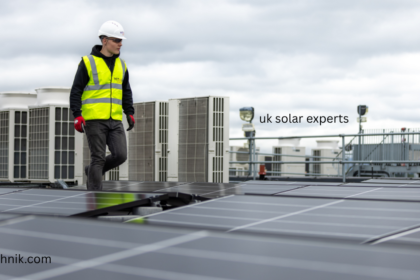

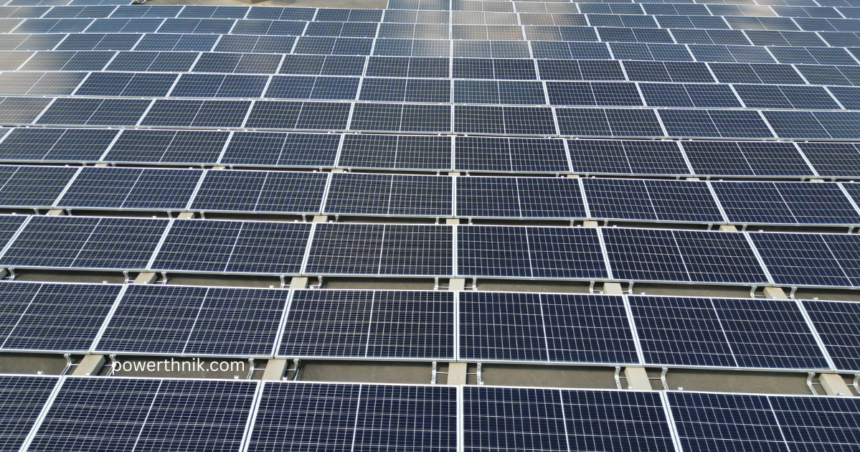
Homeowners exploring solar energy often focus only on cost and savings, overlooking a key detail Photovoltaic Panel Dimension that quietly shapes the entire project. physical size. Before any installation begins, two numbers really matter the power rating of a panel and how its actual footprint fits your roof. Sunlight arrives on Earth in abundance every single day, and a photovoltaic cell’s job is simply to catch that energy and turn it into usable power. At the heart of every panel is silicon, refined from ordinary sand, which happens to be the second most common element found on Earth’s surface.
Understanding Solar Panel Power Ratings
Most people describe a panel by its wattage rather than its measurements, because wattage tells you how much power it produces not how big it physically is. This rating comes from lab testing under standardized conditions: sunlight fixed at 1,000 watts per square meter and a cell temperature of 25°C. Across the UK, residential installers commonly fit panels rated somewhere between 400W and 450W, with some premium options climbing to 500W. A single 430W panel, under ideal sunlight, can produce close to 430 kilowatt-hours of electricity over a year. A simple way to picture the difference.
Typical Photovoltaic Panel Dimensions
Most standard solar panels sold today run about 2 metres in length and 1 metre in width, giving them a surface area close to 2 square metres. Thickness usually sits around 4 centimetres, which keeps them slim enough to sit flush on the vast majority of British rooftops.
Once you factor in the mounting rails, clamps, and brackets needed to secure it, though, the total system weight climbs noticeably. For a 12-panel installation, combined weight can reach around 250 kilograms, with the mounting hardware alone contributing roughly 45 to 50 kilograms of that total.
Pitched, sloped roofs are generally built to carry this kind of load without difficulty. Flat roofs are a different story they should always be surveyed by a professional before any panels go up, since their load-bearing capacity varies far more than a sloped structure’s does. Skipping that structural check is one of the more common mistakes homeowners make, so getting a proper roof assessment done early on is well worth the time.
Does a Bigger Panel Mean Better Performance?
It’s tempting to assume that a higher wattage number automatically means a superior panel, but Photovoltaic Panel Dimensions tell only part of the story. A 500W panel isn’t inherently better than a 450W model the real question is how much physical material and surface area were needed to reach that output. A panel that’s oversized for its wattage simply eats into valuable roof space without delivering a proportional gain. The metric that actually reveals efficiency is watts per square metre (W/m²), since it accounts for output relative to size. Much of the wattage growth seen in newer panels comes from manufacturers simply building larger panels not from genuine leaps in cell efficiency.
Residential Roofs vs Commercial Installations
Commercial buildings warehouses, factories, large flat-roofed facilities can accommodate far bigger and more powerful panels, since space usually isn’t a constraint. Some monocrystalline commercial panels now exceed 700W. These oversized units, however, rarely make sense on a house roof; their larger footprint makes it difficult to fit enough panels into a limited residential space, which is why anything much above 500W tends to stay in the commercial category.
How Much Roof Space Do You Actually Need?
A useful starting benchmark: your roof should comfortably fit at least six panels for solar to be worthwhile. A typical 3kWp residential system usually calls for seven or eight panels, occupying roughly 23 square metres of roof surface. Since each panel covers close to 2m², installers also factor in extra clearance commonly around 40cm around the edges of the array and about 3cm of spacing between individual panels. Obstructions like chimneys, skylights, and vent pipes eat into usable space too, sometimes adding up to nearly 0.8m² of area that has to be worked around. Dormer windows add further complications, since the flat sections of roof beneath them often lack the structural strength needed for panel mounting.
Inside the Panel: Solar Cells
Every crystalline solar panel is built from individual solar cells, which rely on the photovoltaic effect to convert light into electrical current. These cells are typically square, measuring about 6 inches on each side. A standard residential panel houses somewhere between 60 and 72 of them, though higher-output models can include 120, 132, or even 144 cells usually half-cut cells, sliced from full-size cells to squeeze out extra efficiency. More cells packed into a panel generally means more power, which explains why some of the highest-rated panels on the market, such as Seraphim’s 720W Hydra model, carry an especially dense cell count.
How to Pick the Correct Solar Panel Size
There isn’t a single “correct” panel size for every household the goal is matching Photovoltaic Panel Dimensions to your specific roof shape and energy needs. A good installer will typically start by calculating your home’s annual electricity consumption, then work backward to determine how many panels, and of what size, will fit efficiently without wasting roof real estate. Prioritising that balance almost always pays off more than simply chasing the highest wattage number available.
How Panel Sizes Have Changed Over Time
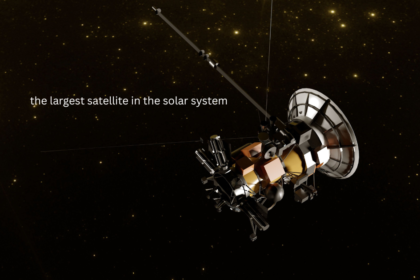
Solar technology has advanced considerably in a relatively short span. Back in the 2010s, a typical residential panel averaged around 290W; today, many models comfortably exceed 500W. For perspective on just how far the technology has come: roughly sixty years ago, NASA’s Orbiting Astronomical Observatory satellite relied on 53,000 individual solar cells and still only generated 0.7kWp of power. A modern rooftop system could match that same output using just two panels and fewer than 200 cells. NASA’s original array spread across 17.4 square metres that same amount of space on a rooftop today could support around 3.9kWp, nearly five times the satellite’s original output.
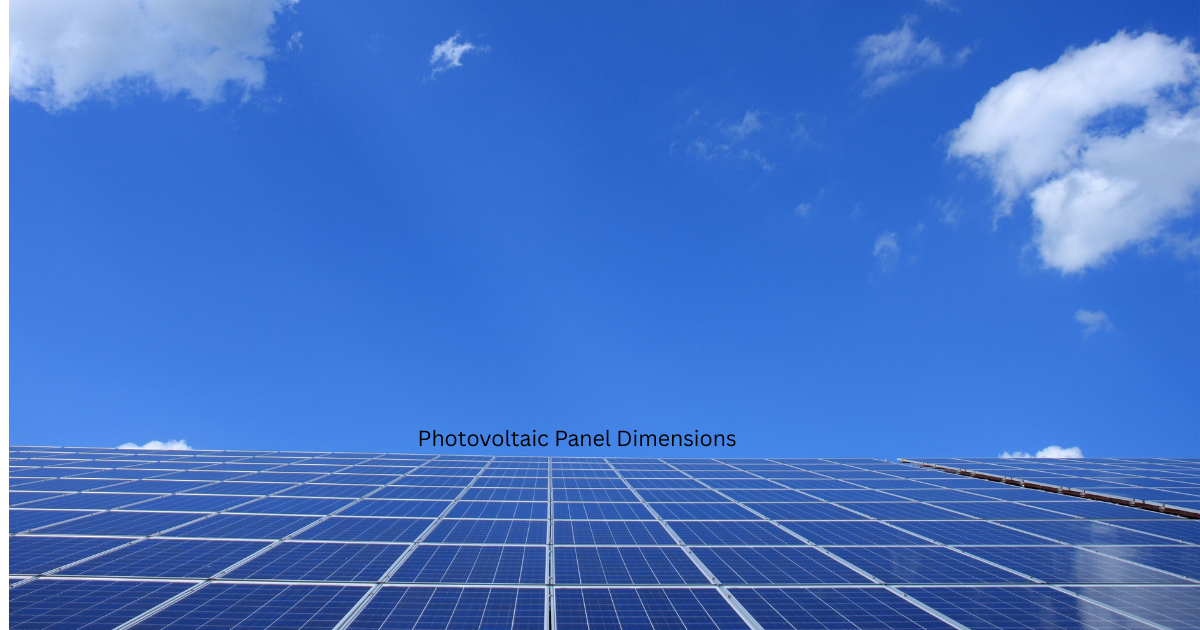
How Solar Cells Are Manufactured and Wired
Understanding cell construction helps explain why Photovoltaic Panel Dimensions vary the way they do. Manufacturing begins with raw silicon extracted from silica sand and coal, melted down in an electric arc furnace, then sliced into thin wafers. Adding phosphorus creates n-type material with a surplus electron; adding boron creates p-type material with an electron hole. Where these two layers meet, a PN junction forms, producing an electric field and a voltage difference the basic mechanism behind solar power generation. On top of this sits an anti-reflective coating, a metal conducting grid, and bus bars, all protected beneath a glass layer that shields the cell from moisture and debris.
Individual cells generate roughly 0.5 volts each, so they’re wired together into strings to build usable voltage 36-cell modules are common for 12V off-grid battery setups, while 60, 72, or 96-cell modules serve grid-connected homes and commercial buildings. Wiring cells in series increases voltage; wiring them in parallel increases current instead. Polycrystalline cells have a distinctive blue, fragmented appearance and typically run 13-17% efficient. Monocrystalline cells look darker almost black and reach higher efficiencies of 15-19%, though at a higher price. Thin-film panels, made from amorphous silicon, have a brownish tint and remain flexible enough for curved or irregular roof surfaces.
From the Panel to the Power Grid
Once assembled, panels feed electricity into batteries or directly into an inverter, which converts the stored DC power into the AC electricity homes actually use. Large-scale solar farms apply this same principle at scale, connecting arrays through transformer substations into the wider electrical grid and supporting net metering programmes. Getting orientation, tilt angle, and azimuth right during installation matters just as much as the cell technology itself even a well-built system underperforms badly if it’s poorly positioned. Despite rapid growth, solar still accounts for only about 1.3% of global energy production, largely held back by upfront capital costs.
Final Thoughts
Ultimately, Photovoltaic Panel Dimensions come down to one core trade-off: power output versus physical size, and how well that balance suits the roof space available. A higher wattage figure alone doesn’t guarantee a better panel what really determines value is watts per square metre, total cell count, and how neatly the panel fits your specific roof. Whether you’re planning a small home system or a large commercial array, understanding these dimensions before installation begins not after makes for a far smarter, more cost-effective decision.
Frequently Asked Questions
What are standard Photovoltaic Panel Dimensions?
Most panels measure between 1.7m and 2m in length, 1m to 1.15m in width, and 30-40mm in thickness, giving a typical surface area close to 2 square metres.
How much does a solar panel weigh?
A single panel typically weighs 16-20kg. A complete 12-panel system, including mounting hardware, can weigh around 250kg in total.
Do bigger panels always produce more power?
Not necessarily. Output depends on efficiency watts per square metre rather than size alone. Understanding Photovoltaic Panel Dimensions properly shows that a larger panel isn’t automatically the smarter choice.
How much roof space do solar panels require?
As a general guideline, aim for enough space to fit at least six panels. A standard 3kWp system needs roughly 23m² of usable roof area.
Are commercial and residential panels sized differently?
Yes. Commercial panels tend to be larger and more powerful, built for high-demand facilities, with some monocrystalline models surpassing 700W.
How big is an individual solar cell?
Each cell measures about 6 inches by 6 inches, and most residential panels contain 60 to 72 of them.
Have panel sizes changed significantly over the years?
Yes, average output has grown from around 290W in the 2010s to over 500W today, driven mainly by changes in Photovoltaic Panel Dimensions rather than efficiency alone.
Does panel thickness matter?
It does. Modern frames are usually 30-40mm thick, which helps panels sit closer to the roof surface and better withstand wind loads.