
When I first unboxed my Homewood solar street light, I filmed the whole unboxing for my channel. The packaging inside the box impressed me with how safely it protected the EPS COB solar lamp, its solar panel, remote control, and user manual.
I always tell my viewers that you can buy a trusted solar light brand like this straight from the official website, or through Amazon and Flipkart, and every purchase comes with clear setup steps in the manual. If this guide helps you pick your next solar light, feel free to subscribe to my channel for more honest reviews.
Choosing the right solar light isn’t just about brightness it’s about matching the light to the space, understanding how it charges, and knowing what runtime to expect. Here’s everything I learned from testing mine.
Match the Solar Lamp to the Space
Choosing the right solar lamp depends on where you plan to use it around your home.
For security zones and entrances, go with a motion-activated solar light that has a strong PIR sensor and at least 500+ lumens of output. This way, any movement near the wall triggers instant brightness instead of a weak, gradual glow.
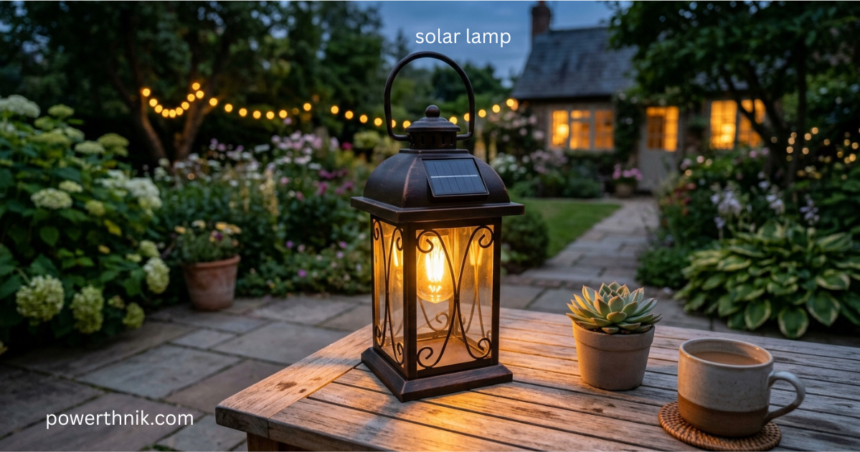
For garden borders and pathways, a softer solar light in the 10–100 lumen range works best. Decorative garden features feel calmer with gentle ambient light rather than a harsh security-grade glare.
For patios, pergolas, and outdoor entertaining areas, festoon lights and fairy string lights add charm without needing high brightness at all.
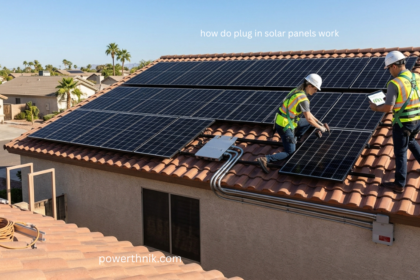
I installed one solar street light on a 30mm metal pipe on my roof and another on a 50mm PVC pipe on my terrace. Both were easy to assemble, since the adjustable stand lets you rotate the head and set the height anywhere between 3 and 4 meters. The pre-drilled mounting holes made it simple to fix the solar light to a wall or balcony railing, and I tested the remote control’s range across two floors of my house without any issues. One unit even had a small motion sensor ball that automatically switched the lamp between dim and bright modes depending on movement underneath it.
Understand Charge and Runtime
Every solar lamp depends entirely on how well it stores energy from the sun during the day.
My unit runs on a 5Ah, 3.2V lithium battery built on LiFePO4 cells. I gave it its first charge in direct sunlight for 8–9 hours, exactly as the manual recommended. A 16-foot cable connects the panel to the lamp through a sturdy port, letting me place the solar panel away from the light itself something integrated stake-style lights simply can’t offer, since their panel is fixed to the unit.
On a full summer charge, the solar lamp runs for 8–10 hours from sunset to sunrise. On cloudy or overcast days in the UK, expect only 4–6 hours of backup, since weaker sunlight means a slower charge.
As darkness falls, the lamp automatically senses night and turns on; once daylight returns, it switches back into charging mode and shuts off on its own. If you’re shopping for winter reliability, separate-panel solar light models with larger battery boxes handle the shorter, weaker days of winter far better than compact all-in-one designs.
Pick the Right Brightness
Brightness is what separates a solar lamp that merely glows from one that actually protects your home.
My Homewood unit uses a 56 SMD 5730 LED chipset. I hold the green button on the on/off switch to power it on, and a separate brightness switch lets me choose between 50% and 100% output.
Here’s a quick brightness guide for picking your own solar lamp:
- Below 50 lumens – ambient glow, ideal for decorative garden accents
- 100–300 lumens – functional pathway and fence lighting
- 500–1000 lumens – bright, general-purpose outdoor lighting
- 1000+ lumens – true security-grade illumination with strong motion triggers
My EPS COB solar light, meanwhile, uses a 120 COB white LED with three separate modes:
- Motion-detect mode jumps instantly to bright light when it senses movement
- Steady dim mode stays dim all night, switching to medium light only on motion
- Constant medium mode stays at medium brightness the entire night
Its remote also includes a timer, letting you set the solar light to run for 3, 5, or 8 hours, or leave it in auto mode to decide brightness on its own.
Waterproofing and Build Quality
Most solar lamps are built to handle rain, snow, and even direct hose spray without issue. My Homewood unit has a heavy-duty ABS + PC plastic body with IP65 waterproof protection, while Power Bee’s solar light range is typically rated IP44 or higher, with several outdoor models sealed at IP65 or IP67. The exact IP rating is always listed in the product’s specification sheet, so it’s worth checking before you buy.
Where to Place the Panel for Best Performance
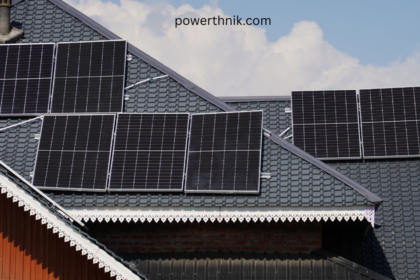
Placement affects a solar lamp’s performance more than most people realize. Mount the panel south-facing and tilted at roughly 45 degrees whether it sits on a roof, terrace, or garden wall with no overhead obstruction blocking daylight. Avoid placing it under trees, near eaves, or behind glass conservatories, since these block the UV wavelengths the panel needs to charge properly.
Using a 30mm metal pipe or a 50mm PVC pipe at a height of 3–4 meters keeps the panel clear of obstructions, and mounting holes make it easy to fix on a balcony too. With separate-panel solar light models, a 16-foot cable lets you keep the light itself in a shaded spot while the panel stays in direct sunlight nearby.
Conclusion
Picking the right solar lamp comes down to three things: matching the brightness and light type to the space, understanding how much runtime you actually need through the seasons, and getting the panel placement right so it charges properly. Whether you want a security-grade solar light for your entrance, a soft ambient one for the garden, or a decorative string light for your patio, there’s a model built for it. Get the placement and brightness right, and a good solar light will keep your home lit reliably, night after night, with zero electricity cost.
FAQs solar lamp
Do solar lights work in UK winter?
Yes, solar lights keep working reliably even through a cold UK winter. Panels still collect energy from daylight even without direct sunshine, though winter runtime drops to about 4–6 hours compared to the full 8–10 hours you get in summer. Keep the panel south-facing and clear of overhead shade for the best results.
How long does a solar lamp take to charge?
A full charge usually needs 4–6 hours of direct sunlight, though it’s best to give a new unit its first charge for 8–9 hours to properly activate the 5Ah, 3.2V LiFePO4 battery. On overcast UK days, allow 6–8 hours of daylight before the panel reaches full capacity.
Are solar lights waterproof?
Most solar lights come with genuine waterproof protection, so rain, snow, or a direct hose spray won’t damage them. Look for an IP65 rating or higher for full outdoor durability, and check the specification sheet to confirm the exact rating before buying.
Where should I place the solar panel for best performance?
Mount the panel south-facing at around a 45-degree tilt, with no trees, eaves, or glass blocking the daylight above it. A mounting height of 3–4 meters on a metal or PVC pipe keeps the panel clear and maximizes charging.
How long does a solar light stay on at night?
On a full summer charge, most solar lights run 8–10 hours from dusk to sunrise, dropping to 4–6 hours in winter due to shorter daylight hours. Auto turn-on and auto turn-off features handle this automatically, or you can set a manual timer for 3, 5, or 8 hours.
What’s the difference between an integrated and a separate-panel solar light?
An integrated solar light has the panel and light built into one unit, which is simpler to install but less flexible in placement. A separate-panel solar light connects via a cable (often around 16 feet), letting you position the panel in full sun while keeping the light itself in a shaded or more convenient spot.
What brightness level should I choose for my solar lamp?
It depends on the purpose: under 50 lumens suits decorative garden accents, 100–300 lumens works for pathways and fences, 500–1000 lumens gives general-purpose brightness, and 1000+ lumens is ideal for security lighting with strong motion detection.
Do solar lamp units need maintenance?
Very little. Wipe the panel occasionally to remove dust, leaves, or debris that could block sunlight, and check the battery compartment once a season for moisture. A well-placed solar light with a LiFePO4 battery can run for years with minimal upkeep.