Buying a lithium leisure battery can feel confusing when every brand promises the moon. Many buyers in the UK and the United States pick the cheapest pack, then regret it after one cold weekend. This guide shows you what really matters, so your next lithium leisure battery fits your caravan, campervan or boat and your budget.
What Is a Lithium Leisure Battery?
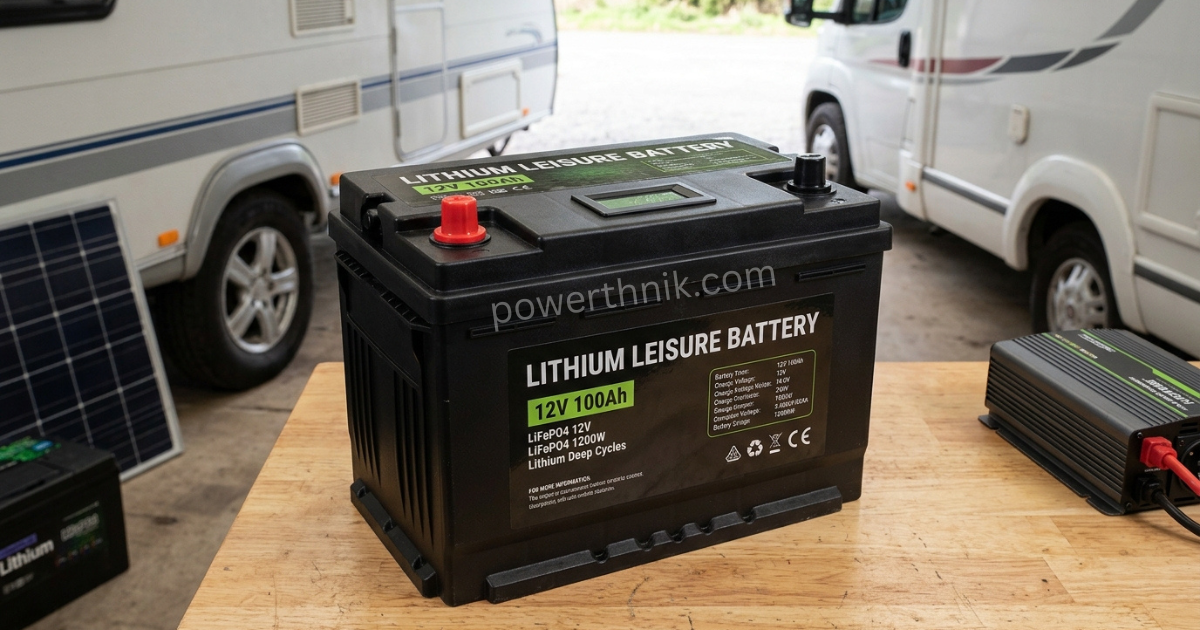
A lithium leisure battery is a deep-cycle pack that powers the living side of your caravan, motorhome or boat. Most use LiFePO4 cells, and a built-in BMS guards against overcharge, over-discharge and short circuits. Your lithium leisure battery then runs lights, a water pump, a compressor fridge and USB charging, while Bluetooth monitoring shows the state of charge on your phone.
Caravan owners, van-lifers and boat owners all gain from the lower weight. A lighter pack frees up payload for gear, water and passengers. It also makes the swap easy when you replace an old 110Ah AGM, because many lithium packs use the standard BCI Group 31 size.
Lithium vs AGM: The Real Numbers
AGM and gel batteries still sell well, but they give you far less usable power. A 100Ah AGM hands you about 50 Ah, while a 100Ah LiFePO4 pack delivers the full 100 Ah in every cycle. That gap is why a lithium leisure battery suits small vans where every amp-hour counts. Practical Motorhome puts usable capacity at 90–100% for lithium against 60–70% for AGM, so a lithium leisure battery stretches your off-grid time.
Weight, Lifespan and Maintenance
A 100Ah AGM weighs around 28 kg, while a lithium pack of the same size weighs about 10.8 kg. Cycle life shows the next big gap, with 200–500 cycles for AGM and 4,000+ cycles for LiFePO4. You also skip top-ups and equalization, and voltage sag under load almost disappears. That is why a lithium leisure battery can serve you for 10 years.
How Big a Lithium Leisure Battery Do You Need?
Start by adding up your daily use in amp-hours. A compressor fridge such as the Dometic CFX5 35 uses about 18.5 Ah a day, and a typical van with lights, a water pump and phone and laptop charging uses around 50 Ah a day. At that rate, a 100Ah lithium leisure battery gives you roughly two days between charges, while a 200Ah lithium leisure battery lasts three days or more.
Leave a safety margin of about 20%, because your usage grows once you own the extra power. If you plan to run a 230V inverter for a kettle or laptop, move up a size. Wiring a second battery alongside the first in parallel doubles your storage, so you can buy one pack now and add another when your trips get longer.
Features to Check Before You Buy
Check continuous current first, because a 100 A pack limits how big an inverter you can run. Next, compare price per kWh. The UK direct prices we reviewed range from about £107 to £351 per kWh, so a lower figure gives you more energy for your money. Then read the warranty terms, which run from 3 years to 12 years and are often prorated. Finally, look for a clear Bluetooth app and a safety certification such as UL or UN38.3, because those marks separate a trusted lithium leisure battery from a risky one.
Use a DC-DC charger so your alternator charges at a safe rate, and fit a fuse close to the terminal. Check that your solar controller has a lithium profile too. A careful setup protects the wiring and your lithium leisure battery for years.
Cold Weather Charging for a Lithium Leisure Battery
Lithium cells must not charge below 0°C, so most packs use a charge cut-off below freezing. That protects the cells, but it also stops your solar panels and alternator from topping up on frosty mornings. Models with a built-in self-heating element get around this by warming the cells before charging starts, and mounting the pack inside the cabin, away from a freezing locker, gives extra help. If you camp in winter, pick a lithium leisure battery with low-temperature protection before you buy.
FAQs
How long does a lithium leisure battery last?
Most LiFePO4 packs offer 4,000+ cycles, which often means about 10 years of regular use. Avoid draining the pack below the BMS limit, and charge it within the safe temperature range. Warranty periods vary from 3 to 12 years, so check the terms.
Will a lithium pack fit where my old AGM battery sits?
In most cases yes, since many lithium packs copy the Group 31 case size. Measure your battery tray first and check that your charger has a lithium mode. Add a DC-DC charger if your alternator charges the battery.
Is a lithium leisure battery worth the extra cost?
Yes, for most regular travellers. You get more usable energy, less weight and a far longer cycle life, so the cost per year often falls below AGM. Occasional users with tiny loads may still prefer a cheaper option.
Can I charge a lithium pack in freezing weather?
Most packs stop charging below 0°C to protect the cells. Heated models keep charging in the cold. Installing the battery inside the vehicle also helps.
What size lithium leisure battery suits a campervan?
A 100Ah pack suits weekend trips with a fridge and lights. Full-timers who use an inverter should look at 165Ah to 200Ah, or run two packs in parallel. Add up your daily amp-hours first, then add a margin.
Do I need Bluetooth monitoring?
You do not need it, but it helps a lot. Through the app you can watch live voltage, current draw and charge level, which helps you catch a fault before it ruins a trip. A battery with an LED display works well if you prefer not to use a phone.