A solar power tracker can change how a photovoltaic system collects sunlight by moving panels as the sun crosses the sky. Instead of keeping modules in one fixed position, tracking equipment adjusts their angle during the day. This approach can increase exposure to direct sunlight and extend useful production into the morning and afternoon.
Tracking technology mainly serves ground-mounted solar farms, commercial arrays, and larger renewable energy projects. The UK solar market continues to expand, with government figures reporting 269,000 solar installations completed during 2025 and more than 2 million total installations reached in March 2026. The United States also has a large utility-scale solar sector where tracking systems are widely considered for ground-mounted projects.
What Is a Solar Power Tracker?
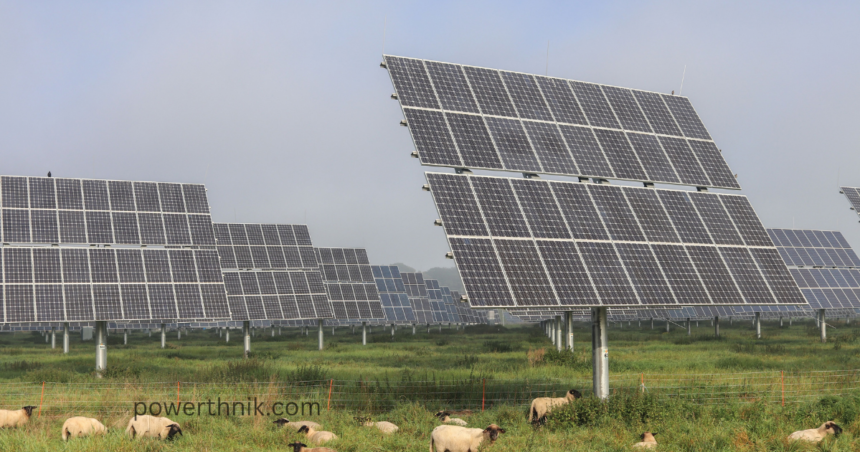
A solar power tracker is a motorized mounting structure that changes the position of photovoltaic panels according to the sun’s movement. A fixed array uses one selected orientation, while a tracker adjusts the modules to keep sunlight closer to the most useful angle. This can improve daily energy capture without requiring the same increase in panel area.
Most tracking equipment works with ground-mounted panels because the structure needs room to move. Rooftops often have limited space, structural restrictions, and obstacles that make moving equipment less practical.
For a solar power tracker, the main goal is simple: keep the panel surface better aligned with incoming sunlight for longer.
How Does Solar Tracking Work?
A solar power tracker uses a control system to decide where panels should point. Some systems use light sensors, while others calculate the sun’s position from time, date, and geographic coordinates. Modern designs can combine programmed positioning with sensors to improve control.
Electric motors, gears, or actuators in a solar power tracker then move the mounting structure. This allows modules to follow the sun’s daily path from east to west while keeping mechanical movement under control.
Single-Axis Tracking
A solar power tracker can use a single-axis design. A single-axis tracker moves panels around one main axis and, in many large projects, follows the sun’s daily east-to-west movement. This design offers a practical balance between energy gain, mechanical complexity, land use, and maintenance.
Single-axis tracking has become common in utility-scale solar because it can increase energy generation while using a relatively simple mechanical arrangement.
Dual-Axis Tracking
For specialist sites, a solar power tracker can use a dual-axis design. A dual-axis tracker moves panels in two directions, following the sun across the sky and responding to changes in solar elevation during different seasons. This provides more precise orientation than a single-axis design.
The design can suit specialist applications where precise solar alignment provides enough value to justify greater complexity.
What Are the Main Benefits?
A solar power tracker can increase the amount of direct sunlight reaching a panel during useful parts of the day. Instead of accepting a compromise position, the array can adjust as the sun changes. This can raise daily energy production and spread output across a longer period.
Another benefit appears when land or project capacity is limited. A developer using a solar power tracker may want more generation from an existing panel field rather than simply adding more modules. Tracking can help use the available generation area more actively, although the extra equipment also needs physical space.
Solar Power Tracker Cost and Maintenance
A solar power tracker normally costs more than a fixed mounting system because it requires moving components, control equipment, structural parts, and installation work. A solar power tracker also uses some electricity, so the project needs to account for power consumption and future servicing.
Maintenance can include inspections of motors, gears, bearings, controllers, wiring, and structural connections. Good maintenance helps reduce the risk of mechanical problems interrupting production.
Wind conditions deserve attention. A large moving panel structure must withstand local weather while protecting the modules.
Is Tracking Suitable for UK and US Projects?
A solar power tracker can suit large ground-mounted projects in both the UK and United States, but the decision depends on the site rather than the country name alone. Latitude, solar resource, land value, electricity prices, grid connection, weather, terrain, and financing can all affect the business case.
The UK has seen strong solar growth. The government’s 2025 Solar Roadmap reported 18 GW of installed solar capacity in Q1 2025, while later government data recorded continued deployment through 2025 and 2026. This growth includes residential rooftops as well as ground-mounted projects.
In the United States, utility-scale solar projects frequently use ground-mounted tracking because large sites can provide space for moving rows. A project team can compare fixed-tilt and tracking designs using expected energy yield, capital cost, operating cost, land requirements, and long-term performance.
When Should You Consider a Tracker?
A solar power tracker deserves consideration when a project has enough land, a suitable ground-mounted design, meaningful direct sunlight, and a clear reason to increase daytime production. Larger projects can spread tracker costs across many panels, which can make the added equipment easier to evaluate.
A fixed system may remain attractive when simplicity, lower equipment cost, minimal maintenance, or limited space matters more. Small residential rooftops often have fewer reasons to add moving hardware, especially when installers can improve production through panel orientation, tilt, additional modules, or battery storage.
Frequently Asked Questions
What does a solar power tracker do?
A solar power tracker moves photovoltaic panels so they can follow the sun during the day. By changing panel orientation, the system can improve direct sunlight exposure compared with a fixed mounting position.
Is a solar tracker better than fixed panels?
Neither design works best for every project. A tracker can produce more energy in suitable conditions, but it also adds mechanical equipment, cost, maintenance, and land requirements. A fixed system may provide a simpler installation.
Are solar trackers suitable for homes?
A solar power tracker is generally more practical for larger ground-mounted projects than ordinary residential rooftops. Homes often have limited roof space and may gain more value from good panel placement, extra capacity, or battery storage.
What is a single-axis tracker?
A single-axis tracker rotates panels around one main axis. Most utility-scale designs follow the sun’s daily movement from east to west. They provide a balance between tracking performance and mechanical simplicity.
What is a dual-axis tracker?
A dual-axis tracker moves panels around two axes. It can follow the sun’s daily path and adjust for seasonal changes in solar elevation. The design offers precise positioning but normally requires more complex equipment.
Do trackers need regular maintenance?
Yes. Moving systems need inspections of mechanical and electrical components. Maintenance can include checking motors, gears, bearings, wiring, controllers, structural connections, and movement limits.