
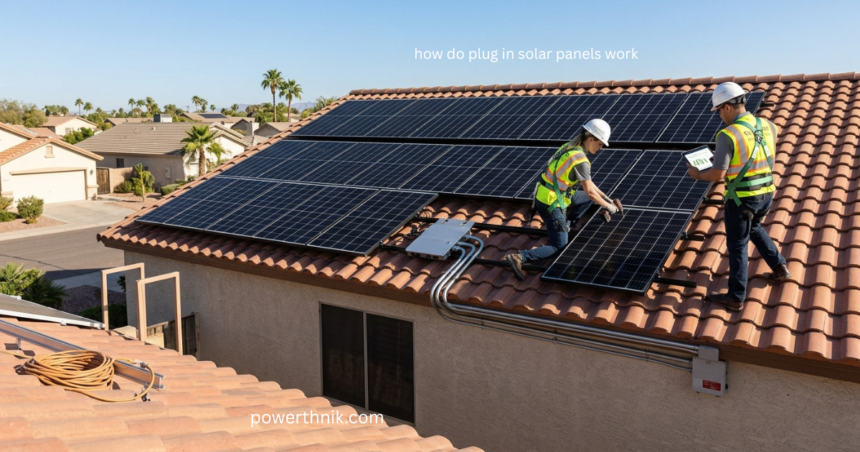
If you have ever wondered how do plug in solar panels work, the basic idea is simple. A solar module captures sunlight and produces direct current (DC) electricity. The microinverter converts the panel’s DC electricity into AC power, allowing your home to use the energy for everyday electrical needs.
This type of system can interest UK households that want to use more solar power without installing a large rooftop system. Depending on the kit, panels may sit on a balcony, garden, roof area, or another suitable sunny location.
What Are Plug-In Solar Panels
Plug-in solar panels are compact solar energy systems designed to generate electricity close to where it will be used. A typical kit includes a solar module, microinverter, cables, and a power plug.
The solar cells turn sunlight into DC electricity, while the microinverter converts the DC output into AC electricity. This simple process explains how do plug in solar panels work and why the system can provide useful power during daylight hours.
How Do Plug-In Solar Panels Work
The process begins when sunlight reaches the solar module. The solar cells produce DC electricity, which travels to the microinverter. The inverter converts the DC output into AC electricity and controls the system’s output according to its design and applicable requirements.
After conversion, the electricity flows into your home’s electrical system through the kit’s connection. Your household appliances can then use this solar electricity, which can reduce your reliance on grid electricity while the panels are producing power
A power meter can help track electricity use. During sunny daylight hours, the panels can supply part of your home’s electricity needs, so you may need less power from the grid. Your actual savings depend on system size, sunlight, household demand, and your electricity tariff. This is the main principle of how do plug in solar panels work.
Plug-In Solar Panels vs Traditional Solar Systems
The biggest differences are usually size, installation method, and output. Traditional solar systems often use several rooftop panels, mounting equipment, an inverter, and professional installation.
A plug-in system normally uses fewer panels and provides smaller-scale generation. It can suit renters, homes with limited roof space, or people who want to start with a smaller solar setup.
However, a plug-in system will not normally produce as much electricity as a properly sized rooftop installation. UK users should choose suitable equipment and follow the manufacturer’s instructions when considering how do plug in solar panels work.
What Is a Balcony Solar System?
A balcony solar system uses compact panels positioned on or around a balcony where they can receive sunlight. This approach can give people another way to use renewable electricity when they do not have a suitable private roof.
The basic process remains the same: sunlight reaches the panel, the panel creates DC electricity, the microinverter converts it into AC electricity, and the system supplies usable power to the home.
Shade, panel direction, angle, and seasonal daylight can affect performance. A sunny, unobstructed position usually gives the system a better chance of producing useful energy. This is an important consideration when learning how do plug in solar panels work.
Key Benefits of Using Plug-In Solar Panels
Plug-in solar gives homeowners a simple way to start generating their own solar energy without immediately choosing a large-scale system.. A smaller system can be easier to understand, install, and move than a full rooftop installation.
It can also help households use more locally generated electricity during daylight. For someone researching how do plug in solar panels work, these practical benefits are often as important as the technology itself.
Simple to Install
Many compact kits contain fewer components than a traditional solar installation. The main parts normally include the panel, microinverter, cables, and connection equipment.
Simple does not mean you should ignore electrical safety. UK homes can have different wiring arrangements, so use suitable equipment and follow all instructions.
Low Initial Cost
A smaller system usually requires less equipment than a complete rooftop solar installation. This can create a low initial cost and make solar more accessible to some households.
Do not choose a system based only on price. Check its specifications, warranty, panel quality, inverter, mounting method, expected generation, and electrical requirements before buying.
Easy to Move
A compact system can be easier to relocate than permanently mounted rooftop panels. This can appeal to renters or people who may move home.
If you relocate the equipment, check the new position, sunlight exposure, mounting, and electrical connection. Never alter wiring simply to make the kit fit.
Do New-Build Homes Have Solar Panels
Renewable energy has become an important part of energy-efficient home design in the UK. Some new-build properties may include solar technology or other measures designed to improve energy performance.
However, you should not assume that every new-build property includes plug-in solar panels. Check the property’s specification and included equipment before making a purchase decision.
Understanding how do plug in solar panels work can also help you decide whether the system included with a new home meets your energy needs.
Are There Any Limitations to Plug-In Solar Panels
The main limitation is output. A small plug-in system generally produces less electricity than a larger rooftop solar installation.
Generation also changes with weather and daylight. Clouds, shade, panel direction, angle, and winter conditions can reduce output. You may see much higher generation on bright summer days than during dark winter periods.
Electrical safety and compatibility also matter. A plug-in system should not be treated as a universal replacement for a professionally designed solar installation. These limitations are important when considering how do plug in solar panels work in real homes.
When Should You Choose Plug-In Solar Panels
A plug-in system may suit you if you want a smaller solar setup, have limited roof access, rent your home, or want to explore renewable energy before investing in a larger system.
It can be particularly useful when you have a suitable sunny location and use electricity during the day. A washing machine, dishwasher, or vacuum cleaner may use electricity while solar generation is available.
For higher electricity needs, a full solar installation may provide more generation. A solar battery can store surplus electricity for later use, although it adds cost and complexity.
What Can Plug-In Solar Help You Save
The main benefit comes from using electricity close to the time your panels generate it. If your home consumes that electricity, you may need less power from the grid.
At a wider level, local solar generation supports the transition towards cleaner energy. Solar generation does not create direct emissions while producing electricity, which can help reduce air pollution compared with electricity sources that burn fuel.
Small plug-in systems have gained attention in countries such as Germany, France, and Italy. UK households should follow UK-specific rules because requirements can differ between countries.
Knowing how do plug in solar panels work also makes it easier to understand where the savings come from and why daytime electricity use matters.
Can Plug-In Solar Panels Work During a Blackout?
A normal grid-connected plug-in solar system should not be expected to keep household circuits running during a grid outage. Its safety controls can stop generation when the grid connection goes down.
If you want backup electricity, you need equipment designed for backup operation, such as a suitable battery and backup system. Do not assume that sunlight alone will keep a plug-in system working during a blackout.
This is another key point to remember when asking how do plug in solar panels work during an emergency.
Final Thoughts
Once you understand how do plug in solar panels work, the process becomes easy to remember: sunlight reaches the solar module, the panel creates DC electricity, the microinverter converts it into AC electricity, and the system supplies usable power to the home.
For UK households, this can provide a smaller route into renewable energy where a larger installation may not suit the property. Before buying, compare the equipment, expected output, safety requirements, installation method, and current UK rules.
If you are still asking how do plug in solar panels work, remember the chain: sunlight → solar module → DC electricity → microinverter → AC electricity → home.
For anyone researching how do plug in solar panels work before buying a kit, the most important point is to choose a suitable system rather than simply choosing the cheapest option. Good planning can help you get useful solar generation while keeping the installation safe and practical.
FAQs how do plug in solar panels work
How Do Plug-In Solar Panels Work?
How do plug in solar panels work They use solar panels to generate DC electricity from sunlight, while a microinverter changes it into AC electricity that your home can use.
Can You Plug Solar Panels Into a Normal Socket?
A complete plug-in solar kit can connect to a suitable household socket through its approved equipment. You should always follow the manufacturer’s instructions and UK electrical requirements.
Do Plug-In Solar Panels Work on Cloudy Days?
Yes, solar panels can still generate electricity in cloudy weather, but their output usually falls because less sunlight reaches the solar cells.
Can Plug-In Solar Panels Reduce Electricity Bills?
They can reduce the amount of electricity your home needs from the grid by supplying solar power during daylight hours. Your actual savings depend on generation and how much electricity you use while the panels are producing power.
Are Plug-In Solar Panels Safe?
A properly designed and correctly installed system can be safe to use. Choose suitable equipment, inspect cables and connections, and follow all manufacturer instructions. If you have concerns about your home’s wiring, contact a qualified electrician.
Can Plug-In Solar Panels Work During a Power Cut?
Most standard grid-connected systems stop operating when the grid goes down for safety reasons. If you need electricity during a power cut, you would need a suitable battery and backup system designed for that purpose.