
Energy prices and heating costs continue to influence how UK homeowners, landlords, and businesses manage their buildings. A heat recovery system can help reduce wasted thermal energy while improving indoor comfort and ventilation. Instead of allowing useful heat to escape with stale air or industrial exhaust, the technology captures that energy and transfers it to incoming air, water, or another process.
It can be a practical choice for UK buildings where regular ventilation is needed. Modern homes often have better insulation and greater airtightness, so controlled ventilation becomes important for maintaining fresh indoor air. Commercial buildings, offices, schools, hotels, and industrial sites can also use heat recovery to lower energy demand.
What Is a Heat Recovery System
A heat recovery system captures heat that would otherwise leave a building or process and uses it again. In a home, the equipment may recover warmth from outgoing stale air before fresh outdoor air enters. In an industrial setting, it may recover energy from hot exhaust gases, boiler flues, ovens, or manufacturing processes.
The main principle remains simple: transfer useful thermal energy from a warmer stream to a cooler stream without unnecessarily mixing them. This reduces heat loss and can lower the amount of energy needed from boilers, heat pumps, or other heating equipment.
How Does It Work
A well-designed heat recovery system typically uses two air streams. One stream carries warm, stale indoor air toward the recovery unit, while the other brings cooler outdoor air into the property. A heat exchanger sits between these streams.
As the two airflows pass through the exchanger, heat moves from the outgoing air to the incoming air. The fresh air can therefore enter the building at a more comfortable temperature. Filters can remove dust and pollen, while fans maintain controlled airflow throughout the property.
Why Is It Useful in UK Homes
For many UK homes, a heat recovery system can reduce ventilation heat loss. UK homes often need heating for a large part of the year. At the same time, ventilation remains necessary to remove moisture, odours, and pollutants. Opening windows provides fresh air but can also allow valuable warmth to escape.
A heat recovery system addresses this problem by providing controlled ventilation while retaining much of the available warmth. This can make sense in newer, airtight properties where natural air leakage remains low. It can also suit extensions, renovated properties, and well-insulated homes when the building design supports mechanical ventilation.
The technology does not create free heat. Instead, it reduces the amount of useful energy lost during normal ventilation. The actual benefit depends on the building, occupancy, climate, airflow settings, equipment efficiency, and installation quality.
Main Types of Heat Recovery Technology
Different buildings need different solutions. A heat recovery system should match the source of waste energy and the intended use.
Mechanical Ventilation With Heat Recovery
Mechanical ventilation with heat recovery, commonly called MVHR, is one of the best-known options for UK homes. A central unit extracts stale air from kitchens, bathrooms, and other wet rooms while supplying filtered fresh air to living spaces and bedrooms.
The exchanger transfers warmth between the outgoing and incoming air streams. The system keeps the airflows separate, so fresh supply air does not normally mix directly with extracted air. Correct balancing of the ductwork helps maintain comfort and efficient operation.
Heat Recovery Wheels
Heat recovery wheels use a rotating heat exchanger to transfer energy between exhaust and supply air. The wheel passes through both air streams and carries thermal energy from one side to the other.
Some wheels recover mainly sensible heat, while enthalpy wheels can also transfer moisture. These systems commonly appear in larger HVAC installations such as offices, hospitals, leisure facilities, and commercial buildings.
Plate Heat Exchangers
A plate heat exchanger uses multiple thin plates to create separate channels for two fluids or air streams. Heat passes through the plate material while the streams remain physically separated.
This design can provide reliable heat transfer with relatively few moving parts. Engineers can select different exchanger materials, sizes, and configurations according to temperature, airflow, pressure, and hygiene requirements.
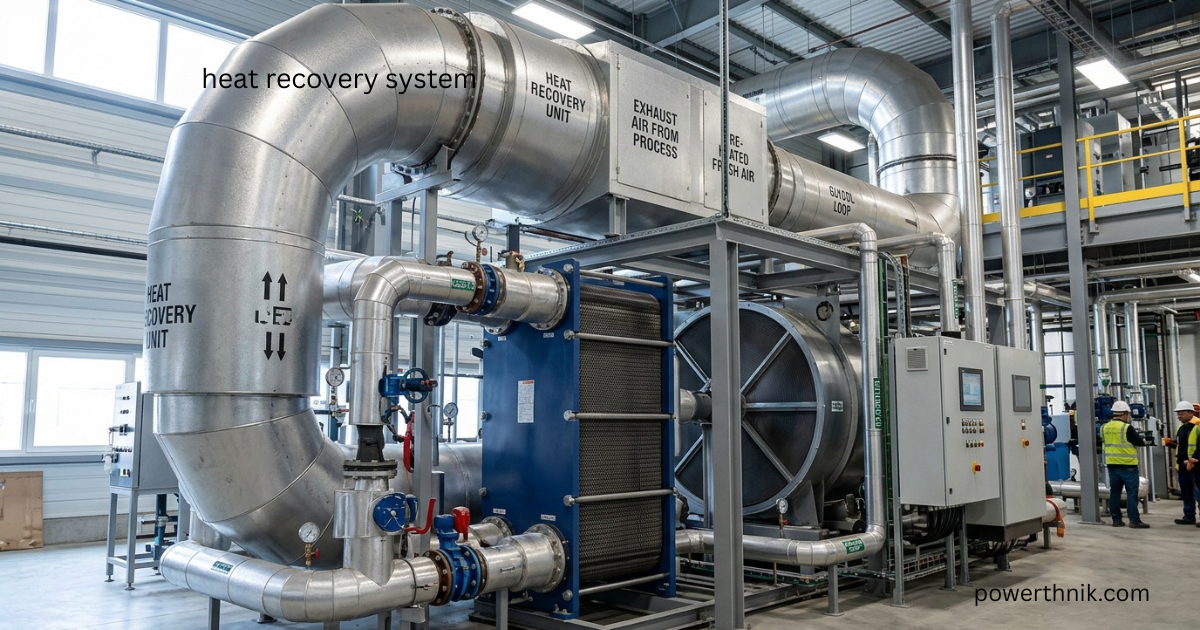
Boiler and Industrial Heat Recovery
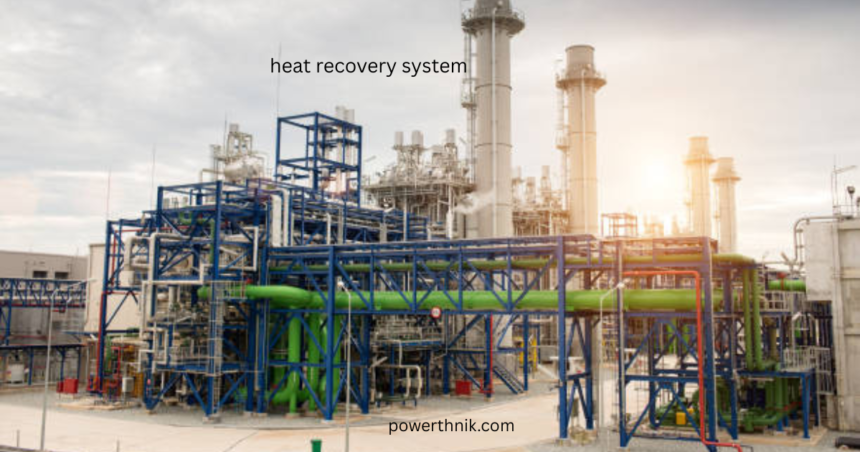
Large boilers, furnaces, ovens, and industrial processes can release significant amounts of heat through exhaust gases. A recovery unit can capture some of that energy and use it to preheat combustion air, water, or another process stream.
Benefits for UK Properties and Businesses
One major benefit of a heat recovery system is lower energy demand. When a building recovers useful heat, its main heating equipment may need to supply less additional energy. This can help reduce heating costs over time.
Another benefit involves indoor air quality. Properly designed ventilation removes stale air, excess moisture, and indoor pollutants while supplying filtered outdoor air. This can support a more comfortable indoor environment.
The technology can also support carbon reduction. Using less fuel or electricity for heating can reduce operational emissions, particularly when the recovered heat replaces energy from fossil-fuel heating equipment.
How Efficient Can It Be
Manufacturers often publish heat recovery efficiency figures, but buyers should not judge performance from one percentage alone. Real-world results depend on airflow rates, temperature differences, fan energy, controls, duct design, filters, and installation quality.
For MVHR, correct commissioning matters greatly. The installer needs to balance supply and extract airflows and set suitable fan speeds. Poor ductwork design can create noise, pressure losses, and unnecessary energy use.
Is It Worth Installing
A heat recovery system can be worthwhile when a property or process regularly loses useful heat and has a consistent demand for that energy. New-build homes, airtight buildings, offices, hotels, and industrial facilities may offer particularly good opportunities.
Before installing a heat recovery system, calculate the expected heat demand, available waste heat, operating hours, installation cost, maintenance needs, and energy savings. A professional assessment can identify whether the technology fits the building rather than relying on a generic efficiency claim.
Maintenance and Running Costs
Regular maintenance helps keep equipment performing properly. Home systems normally require filter inspection and replacement at recommended intervals. Fans, ducts, grilles, condensate drains, and the exchanger should also receive appropriate checks.
Commercial and industrial installations need maintenance schedules based on equipment type and operating conditions. Dirty filters increase resistance and can force fans to work harder. Blocked ducts or poorly maintained components can reduce airflow and recovery performance.
A heat recovery system also uses electricity, so electricity use matters. Fans and pumps consume energy, meaning the best installation does not simply recover a large amount of heat; it achieves useful recovery with sensible auxiliary energy consumption.
Choosing the Right System in the UK
To choose a heat recovery system, start by identifying the source of waste heat. Is it warm indoor air, boiler exhaust, industrial process heat, or another source? Next, identify where that energy can be reused.
For homes, consider building airtightness, floor area, occupancy, ventilation requirements, duct routes, noise, filter access, and controls. For businesses, examine operating hours, process temperatures, airflow, available space, maintenance access, and future expansion.
A good design should also work with the property’s existing heating strategy. Depending on the building, recovered heat may complement boilers, heat pumps, hot-water systems, or other energy-saving measures.
Final Thoughts
Heat recovery technology offers a practical way to make better use of energy that would otherwise disappear into the atmosphere. For UK homes, MVHR can combine controlled ventilation with heat retention. For commercial and industrial sites, larger recovery equipment can capture energy from ventilation, boilers, and production processes.
The best results come from correct sizing, professional design, careful commissioning, and regular maintenance. Rather than choosing equipment because it promises a high efficiency percentage, assess the building’s actual heat flows and energy needs. When those factors match, heat recovery can become a valuable part of a more efficient and lower-carbon UK property.
Frequently Asked Questions
What does a heat recovery system do?
It captures useful heat from an outgoing air or exhaust stream and transfers that energy to an incoming air stream, water supply, or another process. This reduces unnecessary heat loss and can improve overall energy efficiency.
Is a heat recovery system the same as MVHR?
Not always. MVHR is one specific form of heat recovery used for mechanical ventilation. The wider technology also includes heat recovery wheels, plate exchangers, boiler economizers, and industrial recovery equipment.
How efficient is this technology?
A heat recovery system can achieve strong efficiency when designed correctly. Efficiency varies according to the equipment, airflow, temperatures, controls, and installation. Manufacturers provide rated figures, but real performance depends on correct design, commissioning, maintenance, and operating conditions.
Can it reduce heating bills?
It can reduce heating demand by reusing energy that would otherwise be lost. The amount saved depends on the building, energy prices, occupancy, ventilation rate, equipment efficiency, and installation cost.
How often does it need maintenance?
Maintenance schedules vary by system. Residential ventilation units commonly need regular filter checks and replacement, while commercial and industrial equipment may require more detailed servicing based on operating conditions and manufacturer guidance.
Is it suitable for an existing UK home?
It can be suitable, especially during a major renovation or when the property has good airtightness and space for ductwork. A survey should check the building layout, ventilation needs, installation access, and expected energy benefits before work begins.