
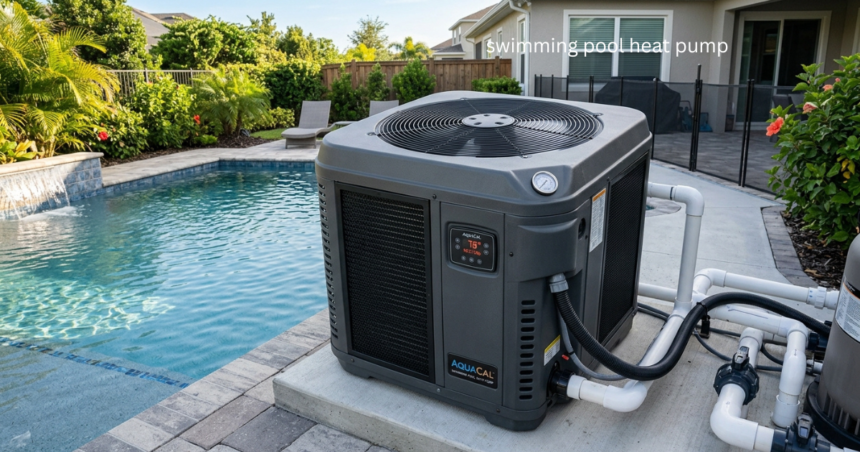
A swimming pool heat pump can turn a short UK swimming season into a much longer period of comfortable swimming. Instead of creating heat with a large amount of electricity, this system takes warmth from outdoor air and transfers it into pool water. That makes it an attractive option for homeowners who want reliable pool heating without the high running costs associated with direct electric heating.
For a UK pool, the important question is not simply which model has the highest advertised output. Pool size, target water temperature, weather, wind exposure, pool cover, insulation and the months you plan to swim all affect performance. A properly planned system can maintain a steady temperature while using electricity more efficiently than resistance heating. Modern inverter models can also adjust their output instead of repeatedly switching fully on and off.
What Is a Swimming Pool Heat Pump
Functioning as an air-to-water energy transfer system, a pool heat pump utilizes an integrated fan to pull ambient air over evaporator coils. The fluid refrigerant inside the system extracts ambient thermal energy, converting it into warm vapor. A compressor then raises the refrigerant temperature before a condenser transfers the captured heat into water moving through the heat exchanger.
The cooled refrigerant returns to its liquid state and the cycle starts again. The system therefore moves heat rather than producing it directly. Its efficiency is commonly described by COP, or coefficient of performance. Actual COP changes with air temperature, water temperature and operating conditions, so advertised laboratory figures should not be treated as guaranteed everyday results.
How Does It Work in the UK
British weather makes correct planning especially important. A heat pump generally performs better when surrounding air is warmer because the system has more heat available to extract. As outdoor temperatures fall, the unit has to work harder and efficiency can drop.
For an outdoor pool, the warmest part of the day can provide better operating conditions. This is one reason owners often combine daytime heating with a good pool cover. The cover reduces heat loss from the water surface, particularly through evaporation, so the heating system does not have to replace lost warmth continuously.
Choosing the Right Size
Correct sizing matters more than simply buying the biggest machine available. Selecting the right pool heat pump requires sizing the unit based on total water capacity, surface dimensions, desired water warmth, and regional usage months. Professional technicians also evaluate ambient humidity, local breeze levels, structural shielding, installation type (indoor vs. outdoor), and pool cover usage.
Choosing a unit with insufficient heating capacity forces it to operate continuously without achieving target warmth. An appropriately sized model can maintain the target more comfortably without unnecessary strain. Published sizing guides use different assumptions, so simple kW-per-volume rules should be treated as starting points rather than a final design calculation.
The Critical Role of a Thermal Pool Blanket
A heat pump works best when the heat it adds stays in the pool. A cover helps by limiting evaporation and reducing exposure to cooler air and wind. This is especially valuable overnight, when an uncovered outdoor pool can lose substantial heat through its surface.
Instead of choosing a much larger unit to compensate for constant heat loss, owners can first improve heat retention. Recent UK guidance and industry sources identify pool covers as one of the most effective ways to control heating demand and running costs.
Swimming Pool Heat Pump Running Costs
Running costs vary too much for one figure to apply to every UK pool. Pool volume, electricity tariff, target temperature, weather, operating hours and cover use all influence the final bill. Recent UK guides give different seasonal estimates because their pool sizes and assumptions differ, so online figures should be treated as examples rather than promises.
The main advantage is energy efficiency. A modern swimming pool heat pump can deliver several units of heat for each unit of electricity consumed under favorable conditions. Direct electric resistance heating does not provide the same multiplying effect. Real-world performance falls when the air becomes colder, so compare COP figures at realistic UK operating temperatures rather than relying only on the highest brochure number.
Inverter or On/Off Technology?
Traditional on/off systems operate at full output until the desired temperature is reached and then stop. Inverter technology can vary compressor speed according to demand. Once the pool approaches its target, the unit can reduce output rather than repeatedly cycling between full power and shutdown.
That smoother operation can improve comfort and reduce abrupt starts. Modern inverter swimming pool heat pump models are also widely promoted for quieter operation and improved efficiency in changing conditions. The best choice still depends on the pool and installation, rather than the word “inverter” alone.
Installation and Pool System Connection
A swimming pool heat pump normally sits outdoors where it can access a steady flow of air. Integrated directly into the main filtration plumbing, the system routes clean, filtered water straight through the heat exchanger before pumping it back into the basin. Correct water flow is essential because the unit needs circulation to transfer heat safely.
The installation also needs suitable electrical protection, adequate airflow and a sensible position. A qualified installer can check the hydraulic and electrical requirements and ensure compatibility with existing filtration equipment.
What is the Average Heating Duration for a Pool?
Warm-up time frames vary significantly across different pool setups. Starting water temperature, air temperature, pool size, heat pump output, wind, humidity and heat retention all make a difference. A large pool starting from cold can take several days, while maintaining an already warm pool requires much less energy.
A useful approach is to plan ahead, use a cover between sessions and allow the system to maintain a stable temperature. Manufacturer guidance also notes that initial heating can take several days depending on water and air temperature.
Can a Heat Pump Extend Your Swimming Months?
Absolutely, though exact operational months vary by unit specifications, pool setup, and regional climate. Integrating a heat pump enables homeowners to extend outdoor swimming beyond the warmest part of summer, especially when the pool has good insulation and a cover.
Spring and early autumn may require more heating than midsummer because the surrounding air is cooler. Winter operation can become less attractive for an exposed outdoor pool because heat demand rises while the air provides less available warmth.
Is a Swimming Pool Heat Pump Worth It?
For many UK pool owners, the answer can be yes when the system is correctly sized and paired with sensible heat retention. The higher purchase price compared with some heaters needs to be considered alongside long-term electricity use, expected swimming hours and season length.
Remember that a swimming pool heat pump does not remove every running cost. Circulation, filtration, water treatment and other pool equipment still consume energy. Keeping filters clean, maintaining water flow and using the cover correctly can help the whole system operate more effectively.
Noise, Position and Maintenance
Modern units can operate quietly, but noise level depends on the model, fan speed and installation position. Give the fan plenty of open air and keep the equipment accessible for servicing. Check manufacturer sound data instead of assuming every model has the same noise level.
Keep air inlets and outlets clear of leaves and debris, clean the pool filter and follow the manufacturer’s service recommendations. Poor water flow can reduce heat transfer, while professional servicing can identify problems before they become expensive failures.
Final Thoughts
A swimming pool heat pump offers UK pool owners a practical way to gain more useful swimming time without relying on direct electric heating. Its real value comes from the complete setup: correct sizing, realistic temperature targets, good insulation, reliable circulation and an effective cover.
If you are comparing systems, look beyond headline COP figures and purchase prices. Consider how the unit performs in the temperatures you actually expect, how much heat your pool loses, and how often your household will use the pool. A carefully designed system can provide steady comfort while keeping energy use under better control. For many UK gardens, that balance makes a swimming pool heat pump a practical long-term heating choice.
FAQs
How efficient is a swimming pool heat pump?
Efficiency depends on air temperature, water temperature and the model. Under favorable conditions, it can deliver several units of heat for each unit of electricity used.
Does a swimming pool heat pump work in cold UK weather?
It can operate in cooler conditions, but efficiency and heating capacity normally decrease as outdoor temperatures fall. Check the manufacturer’s operating range before planning winter use.
How much does a swimming pool heat pump cost to run?
There is no universal figure. Pool size, electricity price, target temperature, weather, operating time and cover use can make seasonal costs vary considerably.
Do I need a pool cover?
A pool cover is strongly recommended for outdoor pools. It limits evaporation and heat loss, allowing the heating system to maintain temperature with less energy.
What size swimming pool heat pump do I need?
Sizing depends on pool volume, surface area, target temperature, climate, wind exposure, insulation and cover use. A professional calculation is better than choosing a model from pool volume alone.