

Whenever someone starts thinking about installing solar panels at home, the first question that comes to mind is How much electricity will it produce, and is it actually worth the money? This is exactly where a solar calculator comes in it’s a tool that removes the guesswork and gives you real numbers, so you can make a proper decision about your investment.
In this article, we’ll go step by step through how a solar calculator works, and how system size, battery, and payback period are calculated.
Location and Sunlight Calculation
The first step is figuring out your location. You can get your property’s latitude and longitude from Google Maps just right click on your house on the map and copy the coordinates.
Next comes the concept of Peak Sun Hours meaning how many hours a day the sunlight is strong enough to be equivalent to full strength solar radiation. This number varies by area some places get 4-5 hours, others 6-7 hours. It’s always better to calculate using the lowest number, so your system doesn’t underperform during cloudy or rainy stretches.
Working Out System Size With a Solar Calculator
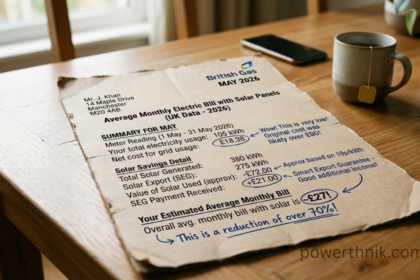
Pull out your monthly electricity bill and check your average kWh (kilowatt hour) usage per month. Entering this number into a solar calculator gives you two figures:
- Minimum System Size just enough to cover your basic needs
- Recommended System Size this includes an extra margin (usually 10-15%) to offset the impact of bad weather or panel degradation

Each roof section also has its own orientation (south, north, east, west) and pitch (angle), which matter a lot. South facing roofs generally produce the most generation, but east or west facing roofs can also perform quite well if shading is minimal.
Shading is another important factor if a large tree or building casts a shadow on the panels, you need to add a shading percentage into the calculator, otherwise the estimate will be inaccurate.
Battery Sizing and Payback Period With a Solar Calculator
If you also want to add battery storage, a solar calculator can tell you how many years it will take for the whole system to pay for itself. Generally, a well sized solar and battery combo pays back within 8 to 12 years but this depends on electricity rates, battery size, and usage patterns.
Here’s an important point: a bigger battery isn’t always better. If a battery is oversized beyond what’s needed, the savings don’t scale with the cost this is what’s called diminishing returns. So battery size should be planned according to your actual daily usage, not just on the assumption that bigger is better.
The Difference Between On-Grid and Off-Grid Calculations
- On-Grid System: Here, the calculation is based on your electricity bill and grid connection. Excess electricity can be sold back to the grid (net metering / export).
- Off-Grid System: Here, there’s no grid backup, so you have to calculate the wattage of each appliance individually (like a fridge, motor, or AC), and design the system based on the worst-case scenario (lowest sun hours).
In off-grid setups, charge controller efficiency also matters MPPT controllers generally offer better efficiency than PWM controllers, which means the system size can be kept somewhat smaller.
Factors You Should Keep in Mind
- Panel Efficiency older panel technology is often less efficient than newer panels.
- System Losses due to inverter and wiring losses, actual generation is usually 10-15% lower than rated capacity.
- Seasonal Variation generation is lower in winter and higher in summer, and this difference should also be factored into the calculator.
- Temperature Coefficient panel efficiency drops slightly in high heat.
Final Thoughts
A solar calculator isn’t just a number generator it’s a tool that gives you a clear picture based on your electricity bill, roof condition, and local sunlight. Whether you just want to install panels or build a complete off-grid system with battery backup, using your real bill and real coordinates for the calculation always gives a better result guesswork can waste both money and time.
Before going ahead with a solar installation, enter your own data into it first that’s the first and most important step toward making the right decision.
FAQs Solar Calculator
What is a solar calculator?
It’s a free online tool that estimates how much electricity your panels will generate based on your roof size, location, and orientation.
How accurate are the results?
Good solar calculator tools use real weather and location data, so the estimate is usually quite close though no tool can give a 100% exact prediction.
Can it calculate battery savings too?
Yes, many tools also factor in battery storage to show how much electricity the battery can cover on cloudy days.
How long is the payback period?
Generally 8 to 12 years, but it depends on system size and local electricity rates.
What’s the difference between on grid and off grid sizing?
On-grid sizing is based on your bill and grid connection, while off-grid sizing is based on total appliance wattage since there’s no grid backup either way, using the right solar calculator is essential.