
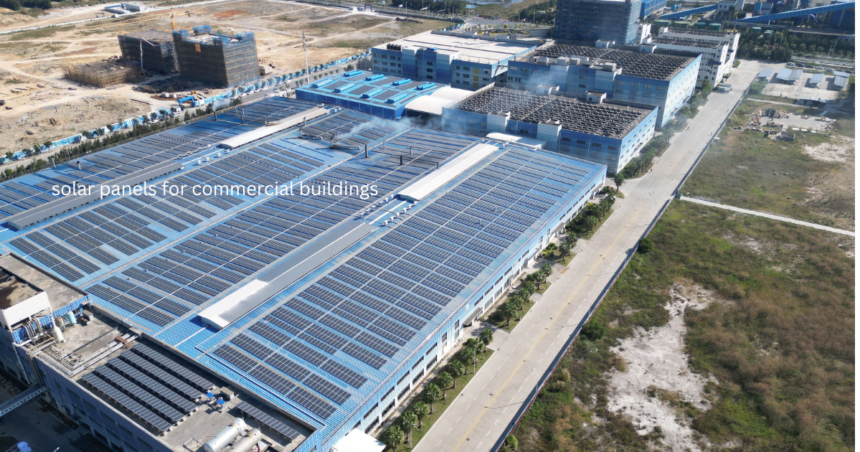
Businesses across the UK are looking for practical ways to reduce operating costs while improving energy performance. Solar panels for commercial buildings can turn unused roof space, car parks, and suitable land into productive energy assets. Instead of buying all electricity from the grid, a business can generate part of its own power and use it during normal working hours.
Commercial properties often have strong daytime electricity demand, which makes solar particularly useful. Offices, warehouses, retail units, factories, hotels, schools, and other workplaces can use solar generation for lighting, computers, heating, cooling, machinery, refrigeration, and other equipment. With careful planning, solar can become part of a wider strategy for reducing energy costs and improving a property’s long-term performance.
Why Solar Panels for Commercial Buildings Make Sense in the UK
Energy costs can have a significant effect on business finances. A commercial property may consume thousands of kilowatt-hours of electricity each month, especially when it operates machinery, heating systems, air conditioning, refrigeration, or other energy-intensive equipment.
Solar panels for commercial buildings allow businesses to produce electricity at the point where they need it. This can reduce grid imports and improve energy independence. The amount of electricity generated depends on factors such as system size, roof orientation, shading, location, panel efficiency, and local weather conditions.
UK businesses should also consider when they use electricity. A company that consumes most of its power during daylight hours may achieve strong value from direct solar generation because it can use more of the electricity as it is produced.
How Commercial Solar Systems Work
A commercial solar system uses photovoltaic panels to convert sunlight into direct current electricity. An inverter then converts that electricity into alternating current that the building can use.
The system normally connects to the property’s electrical infrastructure. When solar production is lower than demand, the building can import additional electricity from the grid. When solar generation exceeds immediate demand, the business may export eligible surplus electricity or store some of it in a battery.
This simple process allows solar panels for commercial buildings to work alongside existing electrical systems rather than replacing them. Businesses can also add monitoring equipment to track generation, consumption, imports, exports, and system performance.
Choosing the Right Commercial Roof
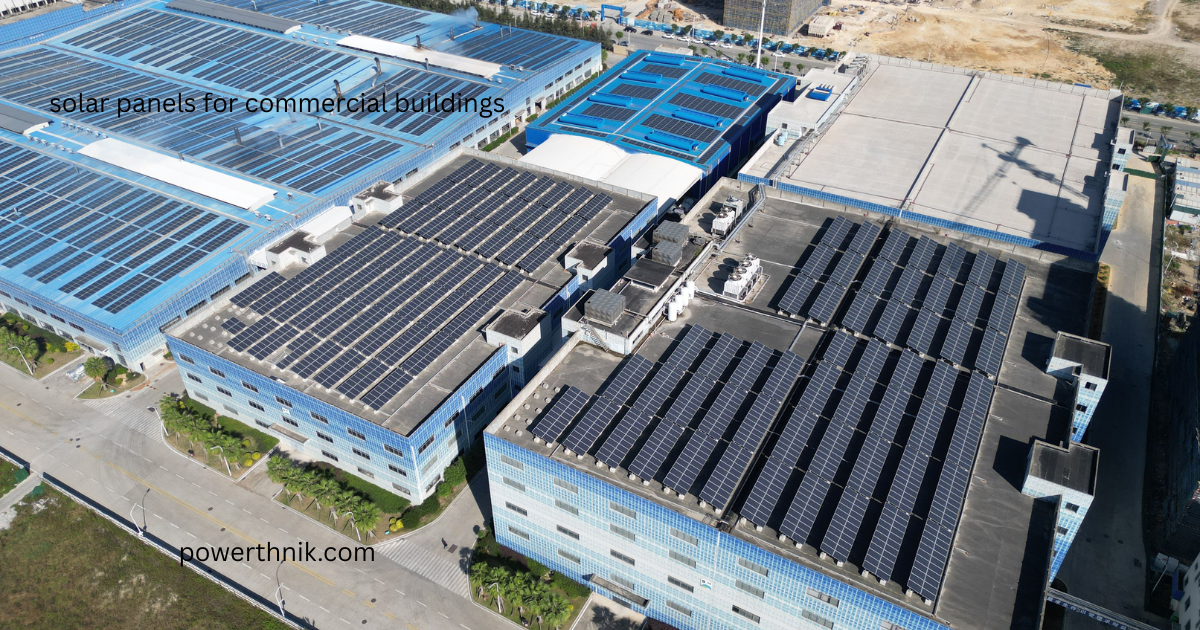
The roof is one of the most important parts of a commercial solar project. Large warehouses, factories, offices, retail buildings, and industrial units often have substantial roof areas that can accommodate a useful solar array.
Before installation, an engineer should assess the roof’s condition, structure, available space, shading, orientation, access, and remaining lifespan. Installing a large system on a roof that needs replacement soon may create unnecessary complications.
Flat roofs can work well because installers can position panels at suitable angles, subject to the system design and structural requirements. Pitched roofs can also provide excellent solar generation when their orientation and condition suit the project.
How Much Electricity Can a Commercial Solar System Generate?
There is no single output figure that applies to every business. A system’s annual generation depends on its installed capacity and the conditions at the property.
For example, a larger warehouse may have enough roof space for a substantially bigger array than a small office. However, roof size alone should not determine the system capacity. The electricity demand of the building, connection capacity, budget, and future energy plans also matter.
A professional feasibility assessment can compare expected generation with the property’s electricity consumption. This helps the business avoid installing a system that is too small to make a meaningful difference or unnecessarily large for its current needs.
Reducing Business Electricity Costs
One of the strongest reasons to consider solar panels for commercial buildings is the opportunity to reduce electricity purchases from the grid.
When the building uses solar electricity directly, the business can avoid buying that portion of its power from its electricity supplier. The value of this saving depends on the tariff and the amount of solar electricity the building consumes.
Businesses can improve the financial value of a system by matching solar generation with daytime operations. Running suitable equipment during periods of strong solar generation can increase direct consumption, although businesses should always make decisions based on operational needs rather than changing processes purely for solar.
Solar Batteries for Commercial Properties
A solar installation does not have to operate alone. A battery can store surplus electricity and release it when the building needs additional power.
This can benefit businesses that continue using significant electricity after solar production falls. Batteries can also support energy management where a property experiences periods of high demand.
For example, an office may generate surplus electricity around midday but experience higher demand later in the afternoon. A suitably sized battery can shift some stored energy into that later period.
However, not every property needs battery storage. Businesses should compare battery costs, expected usage, electricity tariffs, system capacity, and the potential value of increased self-consumption before investing.
Solar Panels and EV Charging
Electric vehicles are becoming an important consideration for UK businesses. Companies may provide workplace charging for employees, customers, visitors, or company fleets.
Solar panels for commercial buildings can work alongside EV charging infrastructure to provide electricity for vehicles during suitable periods. Smart charging can help control when vehicles charge and reduce unnecessary peaks in demand.
A business with a large car park may also explore solar canopies where appropriate. These structures can provide covered parking while supporting solar generation and EV charging.
The best approach depends on the site’s electrical capacity, parking layout, vehicle usage, and future charging requirements.
EPC and Commercial Building Performance
Energy performance matters when businesses rent, sell, or manage commercial property. In England and Wales, an Energy Performance Certificate rates a building from A to G, with A representing the highest energy efficiency.
Solar can contribute to a property’s overall energy performance, although it should not be treated as the only improvement required. Insulation, heating, lighting, ventilation, controls, and other building measures can also affect energy performance.
For property owners planning improvements, solar panels for commercial buildings can form one part of a broader programmed designed to reduce energy consumption and improve the building’s overall efficiency.
Planning Permission and UK Regulations
Planning requirements depend on the property, location, installation design, and applicable rules. Some solar installations can benefit from permitted development rights, while other projects may require planning permission. GOV.UK guidance notes that solar photovoltaic and solar water-heating technology can sometimes fall within permitted development provisions, subject to the relevant conditions.
Listed buildings, conservation areas, unusual installations, and other protected locations can require additional consideration. Businesses should therefore check the current rules with the relevant local planning authority before work begins.
Commercial projects should also consider electrical requirements, building regulations, structural safety, fire safety, grid connection arrangements, and any requirements associated with the particular property.
Exporting Surplus Solar Electricity
A commercial solar system may sometimes generate more electricity than the building can use at a particular moment. Depending on the system and eligibility, a business may export surplus electricity to the grid.
The UK Smart Export Guarantee requires participating suppliers to pay eligible small-scale generators for exported low-carbon electricity, subject to the scheme’s conditions. Ofgem states that eligible solar PV installations can be covered up to a capacity of 5MW.
Export income should not automatically be treated as the main reason for installing a commercial system. For many businesses, using generated electricity on site can be more important because it directly reduces purchased electricity.
Understanding the Financial Return
The financial return from solar panels for commercial buildings depends on the complete project rather than the panel price alone. Businesses should consider equipment, installation, electrical work, structural requirements, monitoring, maintenance, financing, electricity savings, and possible export income.
A proper assessment should estimate annual generation and compare it with the building’s actual electricity profile. This gives the business a clearer view of expected savings and potential payback.
Companies should also avoid relying on generic payback claims. Two buildings with identical solar capacity can produce different financial results because their electricity consumption, tariffs, roof conditions, and operating schedules may differ.
Maintenance and Long-Term Performance
Modern solar systems generally require relatively little routine maintenance, but businesses should still monitor performance. A sudden fall in electricity generation can indicate shading, equipment faults, inverter problems, damaged panels, or other issues.
Regular visual inspections and system monitoring can help identify problems earlier. Commercial properties should also keep records of generation and maintenance so they can compare current performance with expected output.
Keeping the roof and surrounding area free from avoidable shading can also help maintain generation. The exact maintenance programmed should follow the equipment manufacturer’s recommendations and the installer or maintenance provider’s guidance.
Choosing a Commercial Solar Installer
Choosing the right installer can have a major effect on the quality of a project. Businesses should look for appropriate experience with commercial-scale installations rather than selecting a contractor based only on the lowest quotation.
Ask potential installers about previous commercial projects, system design, warranties, monitoring, maintenance, electrical work, structural assessments, and grid connection arrangements.
A good installer should explain the expected generation, system limitations, costs, and assumptions clearly. The proposal should also match the property’s actual electricity consumption rather than simply recommending the largest possible system.
Are Solar Panels a Good Investment for UK Businesses?
For many properties, solar panels for commercial buildings can provide a practical way to reduce electricity purchases while making better use of existing space. The strongest opportunities often occur where the building has suitable roof space and substantial daytime electricity consumption.
Solar can also support wider business goals, including sustainability reporting, energy management, EV charging, and improved property efficiency. Businesses should evaluate the project using their own electricity data instead of relying on general estimates.
The decision becomes even more useful when owners consider future electricity demand. A company planning to add EV chargers, expand operations, install electric heating, or increase production may want to account for these changes before finalizing the solar system.
Final Thoughts
Solar panels for commercial buildings can give UK businesses a practical route towards lower grid electricity use, better energy management, and stronger long-term sustainability. The greatest value comes from designing the system around the property’s real electricity demand rather than simply maximizing the number of panels.
A successful project should consider the roof, electricity profile, planning requirements, grid connection, battery options, EV charging, maintenance, and financial return. With careful planning and professional installation, commercial solar can turn unused building space into a useful source of renewable electricity.
For a UK business considering the next step, the most sensible starting point is an assessment of annual electricity consumption, daytime demand, roof condition, available space, and future energy requirements. This provides the information needed to size the system properly and make a confident investment decision.
Frequently Asked Questions
How much do solar panels for commercial buildings cost?
The cost varies according to system size, roof condition, equipment, electrical work, access, structural requirements, and installation complexity. A professional quotation should use the property’s actual requirements rather than a generic price.
Can solar panels reduce a company’s electricity bills?
Yes. Solar panels for commercial buildings can reduce the amount of electricity a company buys from the grid when the building uses solar generation directly. The saving depends on electricity consumption, tariffs, solar output, and the percentage of generation used on site.
Do commercial solar panels work in winter?
Yes. Solar panels still generate electricity during winter, although output usually falls because the UK receives fewer daylight hours and lower solar irradiation. A correctly designed system can continue producing useful electricity throughout the year.
Can a business add a battery later?
In many cases, a business can add battery storage after installing solar, provided the electrical infrastructure and original system design support the upgrade. Planning ahead can make future expansion easier and may help the business choose suitable equipment from the beginning.
Do I need planning permission for commercial solar panels?
It depends on the project and location. Some installations may qualify for permitted development rights, while others require planning permission. Businesses should check current requirements with their local planning authority, especially for listed buildings and protected areas.