
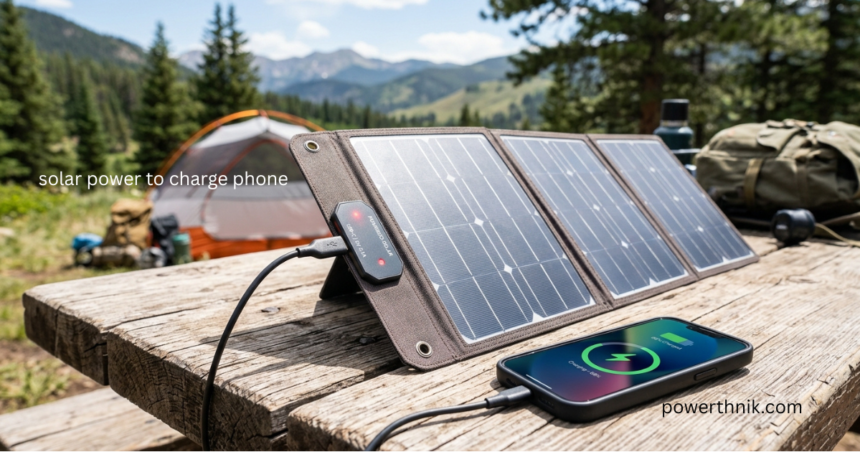
Using solar power to charge phone devices is a smart way to stay connected when you’re away from a wall socket. Whether you’re hiking in the Lake District, camping in Wales, or simply worried about a power cut at home, a solar charger turns sunlight into usable electricity for your phone and other USB gadgets. Given the UK’s changeable weather, choosing the right setup matters just as much as owning one in the first place.
A solar charger can work through direct charging, where your phone connects straight to the panel, or stored charging, where a built-in battery saves energy for later. Some prefer a portable power station for charging several devices at once. The best choice depends on available sunlight, panel wattage, and battery capacity.
How Solar Phone Chargers Work
Solar panels use photovoltaic (PV) cells to capture sunlight and convert it into direct current (DC) electricity. A USB cable then carries this power to your phone, while an internal battery can store surplus energy for cloudy spells.
With direct charging, your phone connects to the panel while it sits in sunlight. With stored charging, energy first fills a built-in battery, which you can then use once the sun disappears a common occurrence in British weather. This makes solar power to charge phone setups far more practical, since you don’t need to stay tethered to the panel all day.
Overall output depends on panel efficiency, size, wattage, and available sunlight. Stronger sunlight, better positioning, and higher efficiency all lead to faster, more reliable charging.
Types of Solar Phone Chargers
Choosing the right solar power to charge phone setup depends on how and where you plan to use it.
Panel-only chargers send power directly to your phone with no storage involved. They’re light and portable, ideal for short outings, but they only work well in strong, consistent sunlight something that can’t always be guaranteed across the UK.
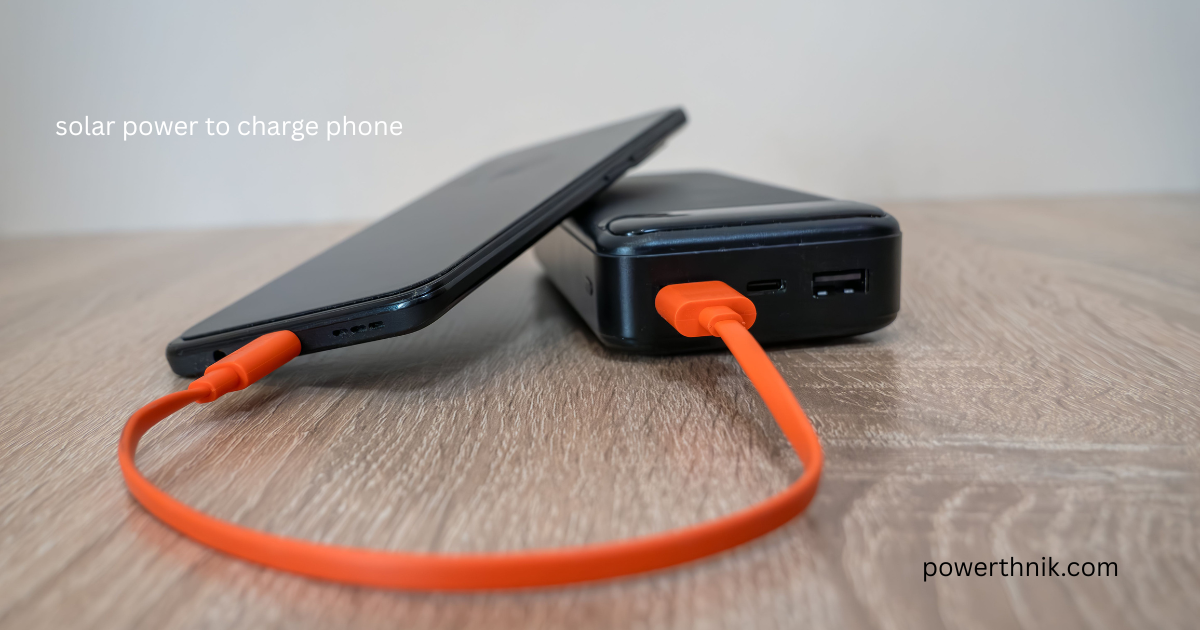
Chargers with built-in batteries combine a panel with internal storage, so you can charge the battery during the day and use it later. This makes them a sensible option for festivals, campsites, and multi-day trips where sunlight isn’t constant.
Portable power stations offer higher capacity for charging phones, tablets, cameras, and other small devices simultaneously. A solar panel can top up the station during the day, giving you an off-grid power source with multiple output ports useful when several people need to charge devices at once.
What to Look for When Choosing a Charger
Beyond price and appearance, pay attention to efficiency, wattage, battery capacity, charging speed, durability, and portability, since these determine how well your solar power to charge phone setup performs in real-world conditions.
Efficiency and wattage
Higher efficiency panels make better use of limited sunlight, while greater wattage supports faster charging when conditions allow. Manufacturer figures are a useful starting point, but actual performance will vary with weather, panel angle, and temperature.
Battery capacity and speed
Capacity is usually measured in milliampere-hours (mAh) and tells you how many charges the unit can store. A larger battery alone doesn’t guarantee quick charging, though output wattage and a suitable USB port matter just as much.
Durability and portability
Look for water-resistant, dust-resistant, shockproof builds for regular outdoor use. Foldable panels and carabiner clips make it easier to attach a charger to a rucksack or tent.
Tips for More Efficient Solar Charging
Good equipment can’t make up for poor positioning. To get the most from solar power to charge phone devices, place the panel in direct, unobstructed sunlight and adjust its angle as the sun moves. Avoid shade from trees, buildings, or vehicles, since even partial obstruction reduces output noticeably.
Keep the panel’s surface clean, as dust and dirt reduce efficiency over time; a soft cloth is usually enough. Avoid leaving the charger in excessive heat, as this can shorten battery lifespan.
Combining a solar panel with a portable power station is one of the most effective ways to guarantee reliable charging. You collect energy during peak sunlight hours and draw on it later, which helps considerably on the UK’s frequent overcast days.
14W Portable Solar Charger
A 14W portable panel is a compact, travel-friendly option for anyone who wants solar power to charge phone, tablet, camera, or Bluetooth speaker devices via USB. Many models include a Smart IC USB port that detects the connected device and adjusts current output accordingly, along with a regulated socket for controlled power delivery.
Look for waterproof, PET-laminated panels with durable PVC casing, suited to Britain’s unpredictable weather. Foldable designs and D-shaped buckles make it easy to attach the panel to a backpack or tent, and some units can charge up to three devices at once.
Conclusion
Solar power to charge phone devices makes real sense whenever you need flexible backup power away from the mains. A basic panel, a battery-equipped charger, or a full portable power station can each suit different needs the right pick depends on your priorities around efficiency, wattage, battery capacity, durability, and portability.
Getting good results is mostly about using the equipment sensibly: keep the panel clean, position it in strong sunlight, track the sun’s angle, and store energy whenever you can. With realistic expectations about UK sunlight, solar charging can keep your phone reliably powered wherever you are.
FAQs Solar Power to Charge Phone
Can you charge a phone with solar power?
Yes. Solar power to charge phone devices works through panels with photovoltaic cells that convert sunlight into electricity, delivered via USB or stored in an internal battery.
How long does it take to charge a phone with solar power?
This depends on panel size, wattage, efficiency, and available sunlight. Direct sun gives faster results; cloud cover or shade slows charging considerably.
Does a solar phone charger work on cloudy days?
It can still produce some power, though output drops. A charger with a built-in battery or power station helps by storing energy from sunnier spells for later use.
Is solar charging safe for smartphones?
Yes, provided the charger has a regulated USB output and Smart IC technology to manage current safely for your specific device.
What wattage solar panel is best for charging a phone?
A 14W panel is usually enough for a single phone or similar USB device. Higher-wattage systems suit those also charging tablets, cameras, or multiple devices.
Are solar phone chargers worth it in the UK?
Yes, particularly for camping, hiking, travel, and power-cut backup. Pairing a panel with a portable power station makes it more dependable given the UK’s variable weather.