Power cuts, camping trips and off-grid living all share one problem. Your devices need AC electricity, but your battery only stores DC. A 12V inverter solves that problem by turning battery power into mains-style electricity you can use almost anywhere. Whether you live in the UK or the United States, choosing the right 12V inverter can mean the difference between reliable power and a flat battery.
What Is a 12V Inverter and How Does It Work?
Think of a 12V inverter as a small power translator that sits between your battery and your appliances. It takes 12-volt direct current from a car, caravan, boat or solar battery and changes it into alternating current. It takes 12-volt direct current from a car, caravan, boat or solar battery and changes it into alternating current. In the US the output is usually 120V at 60Hz, while UK models deliver 230V at 50Hz. Inside, fast-switching transistors and a transformer reshape the battery’s flat signal into a waveform that laptops, TVs, power tools and kitchen appliances can use.
Efficiency matters. A quality unit converts 85–95% of battery energy into usable power, and the rest is lost as heat. That is why most designs include cooling fans and need proper ventilation.
Pure Sine Wave vs Modified Sine Wave
The waveform decides what you can safely run. A pure sine wave power inverter produces smooth, grid-quality power. It suits laptops, CPAP machines, medical devices and variable-speed tools. A modified sine wave model costs less and works with simple lights, heaters and chargers, but it can cause buzzing or overheating in sensitive electronics. If your budget allows, a pure sine wave 12V inverter is the safer long-term investment.
How to Choose the Right Size 12V Inverter
Sizing is the most important step. Add up the running watts of every device you plan to use at the same time, then add a 25% safety margin. Motorized appliances such as fridges and drills need two to three times their running watts for a split second at start-up, so always check the surge rating too.
Quick Wattage Guide
- 150–300W: phone chargers, laptops, LED lights and small fans
- 500–1000W: TVs, game consoles, blenders and soldering irons
- 1500–2000W: small microwaves, vacuum cleaners and power tools
- 3000W and above: full van, boat or off-grid cabin setups
Keep in mind that a 1000W load pulls more than 80 amps from a 12V battery. Even a 12V inverter with excellent efficiency will empty a small battery quickly under that kind of load.
Key Benefits and Everyday Uses
A 12V inverter gives you portable power where the grid cannot reach. Unlike a petrol generator, it is silent, produces no fumes and needs almost no maintenance. Popular uses include:
- Camping and caravanning: run lights, laptops and small appliances in the Lake District or Yosemite.
- Road trips and trucking: charge devices and power cooler boxes on long journeys.
- Emergency backup: keep routers, phones and lamps working during outages.
- Solar and off-grid homes: connect a 12V inverter to a battery bank and charge controller for everyday electricity.
- Marine and RV life: power galley appliances without a noisy generator.
Safe 12V Inverter Installation Tips
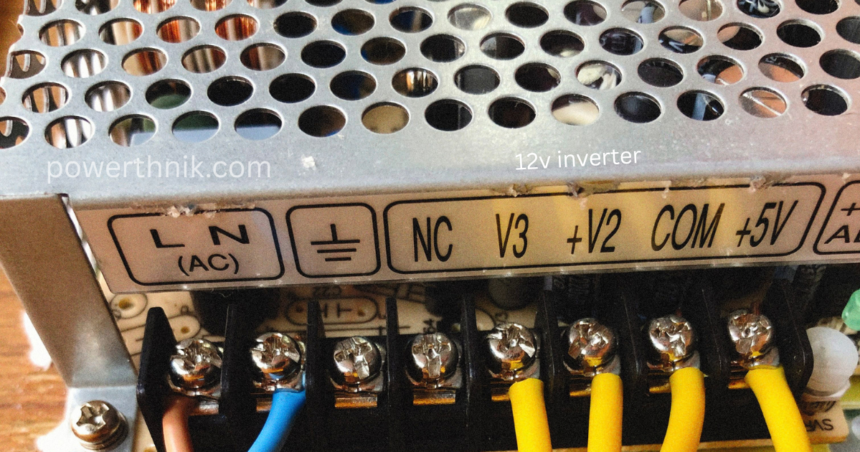
Safety comes first. Mount the unit on a flat, dry surface with at least 10 cm of clear space around it for airflow. Keep cables short and thick, because long thin cables waste power and can overheat. For loads above 300W, connect directly to the battery terminals using the correct cable gauge and an inline fuse. The cigarette lighter socket is usually rated for only 120–180W.
Switch the unit off before connecting, double-check polarity, and never run it inside a sealed box or near flammable materials. A 12V inverter with overload, short-circuit and low-voltage protection adds an extra layer of safety for you and your battery.
Battery Capacity and Runtime
Runtime depends on your battery. A 100Ah lithium battery stores about 1,200Wh, but you should use only 80–90% of it. Lead-acid batteries should not be discharged below 50%. To estimate runtime, divide usable watt-hours by your load in watts, then multiply by 0.9 for efficiency losses. Pairing your 12V inverter with a deep-cycle or LiFePO4 battery gives the best lifespan and value.
Features to Look For Before Buying
Look beyond watts and price. The most useful features are:
- Built-in safeguards: shutdown for overload, shorted circuits, excess heat and a drained battery
- Power points: built to fit your region’s plugs, with a few extra slots for charging phones and tablets
- Certifications: CE and UKCA marks in the UK, UL or ETL listing in the US
- Cooling: a quiet, temperature-controlled fan
- Display or remote switch: live voltage and load readouts
Well-known brands such as Victron Energy, Rangy and Ring Automotive publish honest continuous and peak ratings. A well-built 12V inverter should do the same, so treat vague or inflated specifications as a warning sign.
Common Mistakes to Avoid
Many buyers choose by peak rating instead of continuous power, which leads to overloads and shutdowns. Others use undersized cables, ignore ventilation or pick the cheapest 12V inverter on the shelf. Another frequent error is trying to run a kettle, toaster or space heater. These appliances draw far too much current for a typical setup, so using a 12V inverter for heating appliances is rarely practical.
Conclusion
Match the wattage to your real needs, choose pure sine wave for sensitive electronics, and install with proper fusing and ventilation. The right 12V inverter will give you quiet, dependable power for camping, travel, solar systems and emergencies. A well-chosen 12V inverter, paired with a quality deep-cycle battery, will serve you reliably for years.
Frequently Asked Questions
What size 12V inverter do I need?
Add the running watts of all devices used together, then add 25%. Most campers do well with 300–1000W, while vans and cabins often need 2000W or more.
Can a 12V inverter run a fridge?
Yes, provided the surge rating covers the start-up spike. A compressor fridge typically needs 100–200W while running, so a 1000W pure sine wave unit is usually enough.
How long will my battery last with a 12V inverter?
Divide usable watt-hours by your load. For example, a 100Ah lithium battery running a laptop that draws 100W should keep it going for about 10 hours.
Is pure sine wave worth the extra cost?
For laptops, medical equipment and variable-speed tools, yes. It prevents noise, heat and possible damage.
Can I plug it into a car cigarette lighter socket?
Only for loads up to about 150W. Anything larger should be wired directly to the battery with a fuse.
Will it drain my car battery?
Yes, if the engine is off. Run the engine, use a separate leisure battery, or choose a model with low-voltage cut-off.