
How do solar panels work? In simple terms, they turn sunlight into usable electricity for your home. Each panel holds tiny solar cells made from silicon, and a semiconductor layer inside every cell converts daylight into power your household can use.
Most residential rooftops carry these panels today, while large solar farms cover open rural land across many acres. Your roof direction, panel angle, and shading all affect how much electricity you collect, and panels still produce some power even on cloudy days. Any spare energy your home doesn’t need goes back to the grid, and under the Smart Export Guarantee (SEG), you can earn payment for it.
How Solar Panels Work
The Basic Structure of a Panel
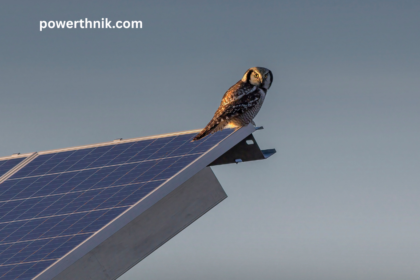
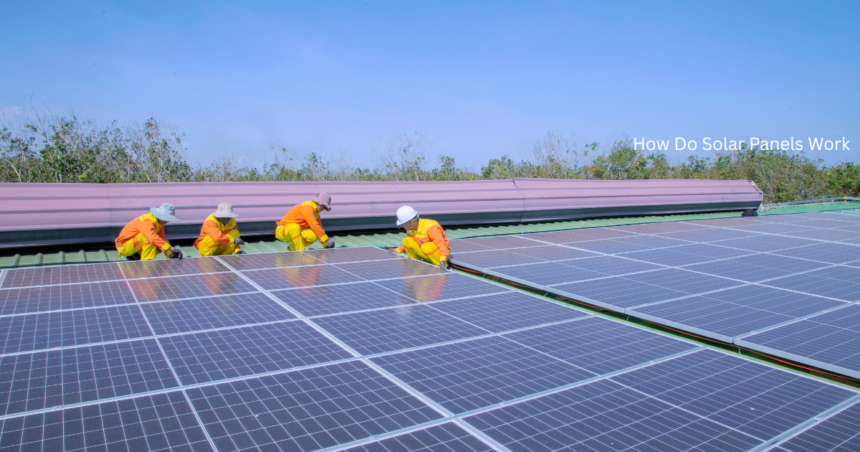
Every solar panel is built from silicon cells, a metal frame, a glass casing, and careful wiring. These panels sit in arrays across rooftops, and each photovoltaic cell absorbs sunlight during daylight hours, even under cloudy skies. Understanding how do solar panels work really starts right here, with this basic structure.
How Electrons Get Freed Inside a Cell
Inside every silicon cell sit two layers treated differently: an n-type layer carrying extra electrons, and a p-type layer full of “holes” wanting electrons. Where these meet, an electric field forms across the p/n junction. When a photon from the sun strikes the cell with enough force, it knocks an electron loose, and the surrounding electric field pushes that electron toward the n-side while the hole drifts toward the p-side.
From Single Cells to Powering a House
This movement of electrons creates direct current (DC) electricity, captured through metal contacts at the top of the cell. A single silicon cell only produces half a volt, so modules string many cells together twelve photovoltaic cells can charge a phone, while a full panel array powers a house.
Converting DC to Usable AC Power
Since DC electricity can’t run household appliances, an inverter converts it into AC electricity, which then reaches your wall sockets just like grid power. At night, your home simply draws from the National Grid, and any surplus energy your panels produce gets sold back through your supplier’s tariff and the Smart Export Guarantee this entire process is really the heart of how do solar panels work in practice.
Solar Farms
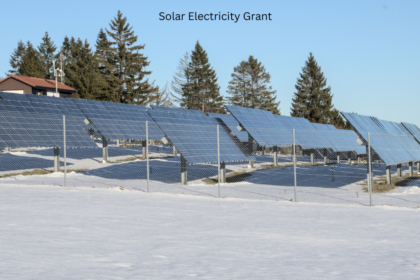
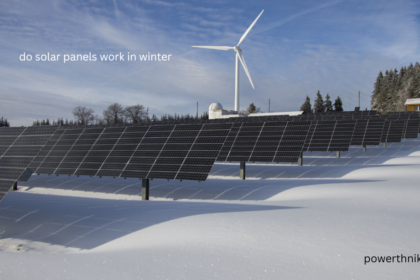
Large-scale solar farms cover vast areas of land with thousands of panels working together. Some use fixed panels facing one direction, while others use sun-tracking panels that follow the sky. Many modern sites pair panels with battery storage to capture excess energy, though most still rely on the wider electricity grid to balance supply and demand throughout the day.
Types of Solar Panel
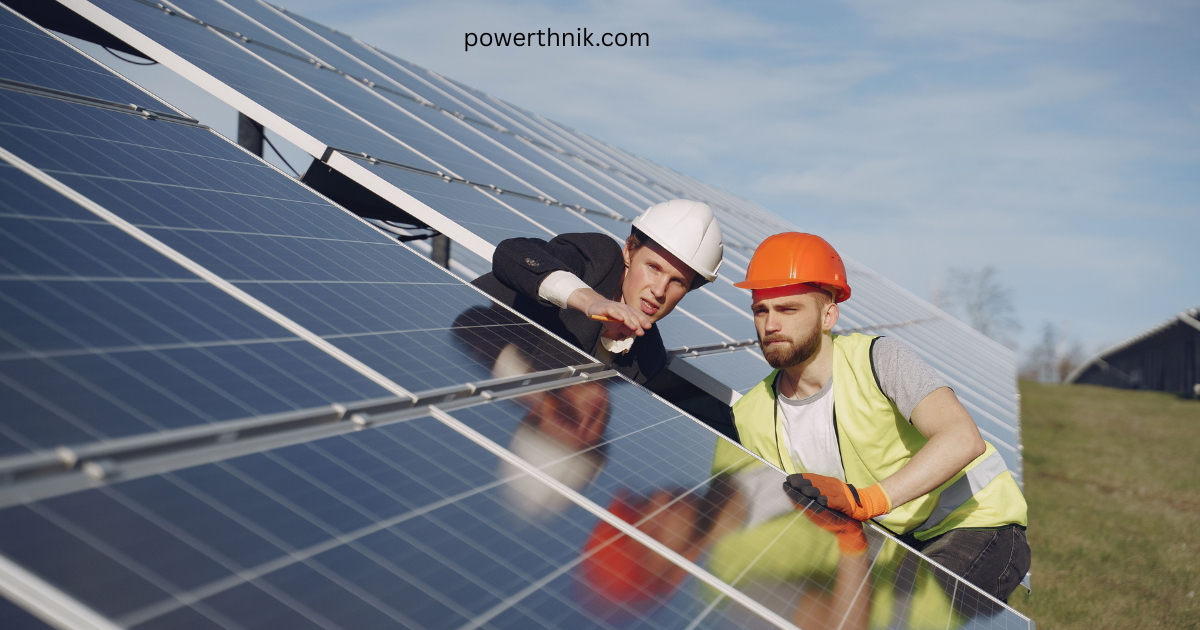
Most people picture classic glass-style panels lining rooftops, but plenty of varieties exist, including panels shaped like ordinary roof tiles.
Efficiency of Solar Panels
Several factors shape efficiency: your location, panel type, and cell purity all matter, with purer cells costing more but performing better. A south-facing roof captures the most direct sunshine, though east-to-west installations still work reasonably well. Shade from trees, especially in full summer bloom, can noticeably cut output.
Roof angle matters too installers recommend an inclination between 22 and 75 degrees, with London performing best around 51 degrees and Aberdeen around 57. Finally, the size and number of panels you fit must match your energy needs while balancing cost against available space.
Agric voltaic
Land used for solar farms doesn’t have to sit idle. Farmers increasingly combine panels with agriculture through agree voltaic, and one study found this approach created a 30% increase in economic value compared with conventional farming alone.
Why Renewable Energy Matters in the UK
Renewable energy comes from natural resources like sun, wind, and water that never run out, unlike fossil fuels such as coal and natural gas, which are running low and cause pollution. Storing surplus renewable power in batteries helps reduce waste and cuts costs over time.
Climate change, driven largely by human activity since the Industrial Revolution, has already warmed the planet by roughly 1 degree centigrade, reshaping weather into something more extreme and unpredictable. The average UK carbon footprint sits near six tonnes yearly, and limiting global warming to 2 degrees means bringing that down to under 2 tons per person by 2050. Small habits lower thermostats, less meat, fewer flights genuinely help, and solar panels play a real role in that shift.
Solar Battery Storage
Solar batteries store excess energy so your home stays powered when the weather turns gloomy or once the sun sets. Instead of always feeding energy back to the grid, chemical reactions inside the battery convert surplus electricity into potential energy, ready for use whenever you actually need it.
Advantages and Disadvantages of Solar Power
Advantages: Solar panels produce clean energy without harmful gases, shrink your carbon footprint, and require little maintenance since they have almost no moving parts. Modern cell efficiency now regularly tops 20%, panels keep getting cheaper, and many carry performance warranties of 20 to 25 years. Free daytime electricity cuts your bills, and UK households can even earn money selling surplus back through the Smart Export Guarantee.
Disadvantages: Panels remain expensive upfront a standard 4kW system typically costs £6,000 to £8,000, though payback usually arrives within 8 to 12 years. They struggle in cloudy conditions, produce nothing at night, and since they can’t store energy themselves, you either use it immediately or add battery storage at extra cost.
Solar Energy Facts
Earth receives more energy from the sun in one hour than the whole world uses in a year. Solar energy dates back almost 200 years, since Alexandre Edmond Becquerel discovered the photovoltaic effect in 1839. Less than 1% of the world’s land would need covering with panels to meet global electricity demand, and panels installed back in the 1970s still work today.
Russell Ohl built the first working solar cell in 1941, and NASA became the first to use the technology in space aboard the satellite Vanguard during the 1950s. Some of the world’s largest solar power plants sit across China, India, and the Middle East, generating several gigawatts and serving hundreds of thousands of homes.
How Much Do Solar Panels Cost?
Once you understand how solar panels work, the next question is what happens to the electricity you generate. It either gets used immediately at home, charges a battery for later use, or travels back to the grid often earning payment through the Smart Export Guarantee, depending on your energy provider’s terms.
Is Solar Power a Clean Energy Source?
Yes. Solar power is a renewable and effectively infinite energy source, releasing no greenhouse gas emissions as long as the sun shines. The carbon footprint of a solar panel is already small given its 25-year service life, and it shrinks further as manufacturing materials become increasingly recycled.
When Was Solar Power Discovered?
Humans first harnessed sunlight as far back as the 7th century BC, reflecting it off shiny objects to start fires. In 1839, French physicist Edmond Becquerel discovered the photovoltaic effect at just 19 years old. Over a century later, in 1954, Daryl Chapin, Calvin Fuller, and Gerald Pearson built the first practical silicon PV cell at Bell Labs, launching modern solar technology as we know it.
Solar PV vs. Solar Thermal Panels
Solar PV panels generate electricity, while solar thermal panels generate heat, and though both rely on the sun, the technology differs completely. This is a key part of how do solar panels work compared to their thermal counterparts PV panels release electrons through the photovoltaic effect, while thermal panels simply heat water directly for domestic hot water or heating systems.
Solar Energy in the UK and US
The UK’s first transmission-connected solar farm switched on near Bristol in May 2023, generating over 73,000 megawatt hours yearly enough for around 17,300 homes. The UK Government has committed to a five-fold increase in solar generation by 2035, targeting 70 gigawatts installed.
In the US, the Department of Energy’s Solar Futures Study suggests solar could supply 40% of the nation’s electricity by 2035, backed by continued investment in grid integration and domestic manufacturing.
Could the World Run Entirely on Solar Power?
Solar energy is unevenly distributed across the planet, and supply drops on cloudy days and disappears at night, so full global reliance would need better storage and smarter distribution. Even the most efficient solar cells today only convert 46% of sunlight into power, with most commercial systems running at 15–20% efficiency.
Still, powering the entire world with today’s technology is technically possible, given enough space and infrastructure and panels keep getting cheaper every year. For over a billion people without reliable grid access, especially in sunny developing countries, solar already beats costlier, riskier alternatives like kerosene.
Final Thoughts
At its core, how do solar panels work comes down to one simple idea: sunlight striking silicon cells, freeing electrons, and turning that motion into electricity your home can use. From rooftop installations to massive solar farms, the technology has matured into something reliable, increasingly affordable, and genuinely capable of cutting both bills and carbon footprints. Solar power isn’t perfect it depends on daylight and still needs backup for night or heavy demand but as efficiency keeps improving and costs keep falling, it remains one of the clearest paths toward a cleaner, more sustainable energy future.
FAQs How Do Solar Panels Work
How do solar panels work in simple terms?
Solar panels absorb sunlight through silicon cells, and this sunlight knocks electrons loose inside the material. That movement of electrons creates direct current electricity, which an inverter then converts into the alternating current your home actually uses.
Do solar panels work on cloudy days?
Yes, they do. Panels still capture some daylight even without direct sun, so they keep producing electricity, just at a lower rate than on a clear day. Cloud cover reduces output, but it never stops it completely.
Do solar panels work at night?
No, solar panels need daylight to generate power, so they produce nothing after sunset. This is exactly why most homes stay connected to the grid or add battery storage, so they have power once the sun goes down.
How long does it take for solar panels to work efficiently after installation?
Solar panels start generating electricity immediately once installed and connected, with no warm-up period needed. Understanding how do solar panels work helps explain why efficiency depends more on roof angle, direction, and shading than on time passed since installation.
What makes solar panels convert sunlight into electricity?
Each panel contains photovoltaic cells built from two layers of silicon treated differently, creating an electric field between them. When sunlight photons strike this field, they free electrons, and that flow of electrons is what produces usable current.
Can solar panels power an entire house?
Yes, a properly sized system can cover a household’s full electricity needs, though this depends on the number of panels installed, the size of the roof, and daily energy consumption. Many homes pair panels with battery storage to cover nighttime use too.
How do solar panels work with the electricity grid?
Any electricity your panels generate but don’t use immediately gets sent back to the grid, and many energy providers pay you for that surplus. At the same time, your home can draw power from the grid whenever your panels aren’t producing enough, which is a key part of how do solar panels work as a complete home energy system.