
Choosing whether to invest in solar panels starts with understanding solar power benefits and drawbacks in real, practical terms. Electricity prices keep climbing, and more UK households and businesses are turning to renewable energy to cut costs and shrink their carbon footprint. Solar isn’t a one-size-fits-all fix, so this guide breaks down the real advantages and trade-offs to help you decide with confidence.
What Is Solar Power
Solar power is electricity generated from sunlight using photovoltaic (PV) panels containing silicon-based cells. Many modern systems pair with battery storage, letting owners save surplus electricity for use after sunset and reducing dependence on the National Grid. Understanding this technology is the foundation for weighing solar power benefits and drawbacks later in the guide.
Solar Power Benefits and Drawbacks at a Glance
Weighing solar power benefits and drawbacks side by side shows that while the technology offers strong long-term savings and environmental value, it also demands upfront investment and careful planning around your property’s suitability.
The Key Benefits of Solar Power
For most homeowners and businesses, the advantages are what make solar worth exploring in the first place.
A Renewable, Unlimited Resource
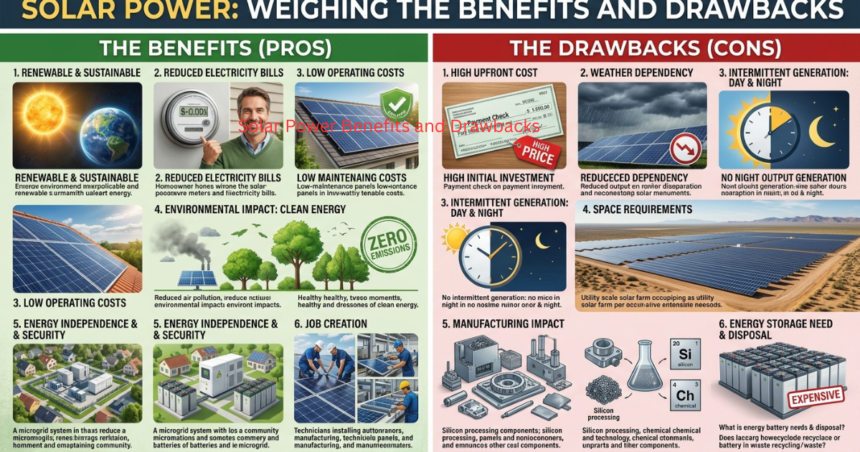
Unlike coal, oil, or gas, sunlight never runs out, which is why this tops most lists of solar power benefits and drawbacks. It’s a resource that will outlast any fossil fuel supply.
Lower Electricity Bills
Generating your own power means buying less from your utility provider. Many owners see their system pay for itself within a few years through reduced monthly bills.
Reduced Carbon Emissions
Solar panels produce electricity without releasing greenhouse gases, helping lower environmental impact while supporting national net-zero targets a point that always favors the benefits side of the solar power benefits and drawbacks equation.
Greater Energy Independence
On-site generation reduces reliance on energy suppliers and protects against market price swings, especially when paired with battery storage.
Low Maintenance and Long Lifespan
With few moving parts, solar panels rarely need repairs beyond occasional cleaning, and most come with 20-to-25-year warranties.
Increased Property Value
Homes with solar installations tend to attract more buyer interest, since lower running costs are increasingly valued in the property market another financial upside worth noting in the solar power benefits and drawbacks discussion.
Reliable Performance in UK Weather
A common myth is that solar only works in sunny climates. In truth, panels keep generating power on cloudy days, just at a lower output a key point in any fair look at solar power benefits and drawbacks for the UK.
Drawbacks to Weigh in the Solar Power Benefits and Drawbacks Debate
No energy solution is without limitations, and solar is no exception.
High Upfront Investment
Panels, inverters, mounting hardware, and installation labor add up to a significant cost, even though prices have fallen substantially over the past decade.
Dependence on Sunlight
Output drops during overcast weather and stops at night, meaning most homes still need a grid connection or battery backup for continuous power.
Costly Battery Storage
Batteries extend the benefits of a solar system but add considerably to the total price a cost that shapes many solar power benefits and drawbacks decisions for budget-conscious households.
Not Every Roof Qualifies
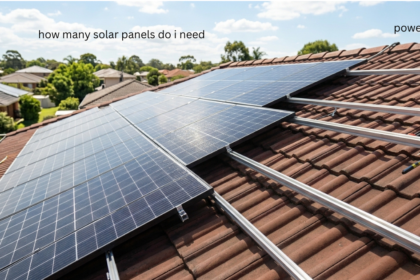
Orientation, angle, shading, and available space all affect performance. South-facing roofs with minimal shade typically deliver the best results, while heavily shaded properties may see disappointing output a reminder that solar power benefits and drawbacks vary from one property to the next.
Manufacturing and End-of-Life Impact
Producing panels requires energy-intensive extraction of raw materials, and recycling infrastructure for ageing panels is still developing an often-overlooked part of the solar power benefits and drawbacks discussion.
Quick Comparison: Benefits vs Drawbacks of Solar Power
| Benefits | Drawbacks |
|---|---|
| Renewable, unlimited energy source | High upfront installation costs |
| Lower electricity bills over time | Output depends on sunlight and weather |
| Reduced carbon emissions | Battery storage adds significant cost |
| Greater energy independence | Not every roof is suitable |
| Low maintenance, long lifespan | Manufacturing has environmental impact |
| Boosts property resale value | Recycling infrastructure still developing |
Seeing solar power benefits and drawbacks laid out this way makes it easier to spot where the real value lies and where extra planning is needed before installation.
Should UK Homeowners Go Solar
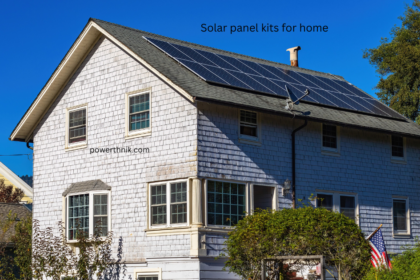
For most homeowners with a suitable, unshaded roof and moderate-to-high electricity use, the answer leans strongly toward yes. Rising energy prices, falling equipment costs, and government incentives have made the financial case stronger than ever, even though the upfront cost still requires careful budgeting.
Is Solar Power Worth It for Businesses
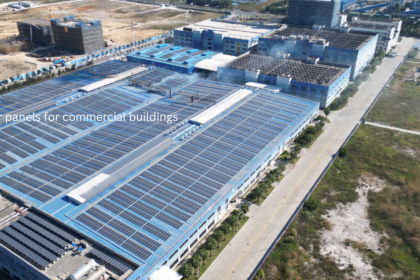
Commercial properties often benefit even more than homes, thanks to larger roof space and higher daily energy demand. Businesses that go solar can reduce operating costs, strengthen sustainability credentials, and improve their appeal to environmentally conscious customers.
Where Is UK Solar Energy Heading Next
Advances in panel efficiency, cheaper battery technology, and smarter energy management are expected to make solar even more attractive in the coming years. As the UK works toward a low-carbon future, solar power will remain central to the national renewable energy strategy.
Conclusion
Weighing solar power benefits and drawbacks carefully is the smartest way to approach any renewable energy investment. The advantages lower bills, reduced emissions, energy independence, and low upkeep are substantial, but they should be balanced against upfront costs, weather dependence, and roof suitability. For most UK properties, a well-planned solar system pays off handsomely over its lifetime.
Frequently Asked Questions
In short, what are the biggest solar power benefits and drawbacks?
On the plus side: cheaper bills, a smaller carbon footprint, more energy independence, and barely any upkeep. On the downside: a hefty upfront price tag, output tied to daylight hours, pricey batteries, and roofs that aren’t always a good fit.
Is solar power worth it in the UK?
For many homeowners and businesses, yes solar can meaningfully cut electricity costs and support sustainability goals, though the value depends on your roof, location, and energy usage.
Will my panels still produce power when it’s overcast?
They will solar panels keep working under grey skies, though you’ll see a noticeable dip in output compared with a clear, sunny day.
Can solar panels really lower my electricity bills?
Yes. By generating your own electricity, you reduce how much you need to buy from your supplier, which can lead to meaningful long-term savings.
Is a battery essential for a solar power system?
No, it’s optional. A battery stores surplus electricity for later use and boosts independence, but many systems work perfectly well without one.
What should I check before weighing solar power benefits and drawbacks for my own property?
Look at your roof’s orientation, shading, available space, current electricity usage, and budget together, these determine how much value you’ll actually get from a solar installation, and they shape the final solar power benefits and drawbacks decision.