
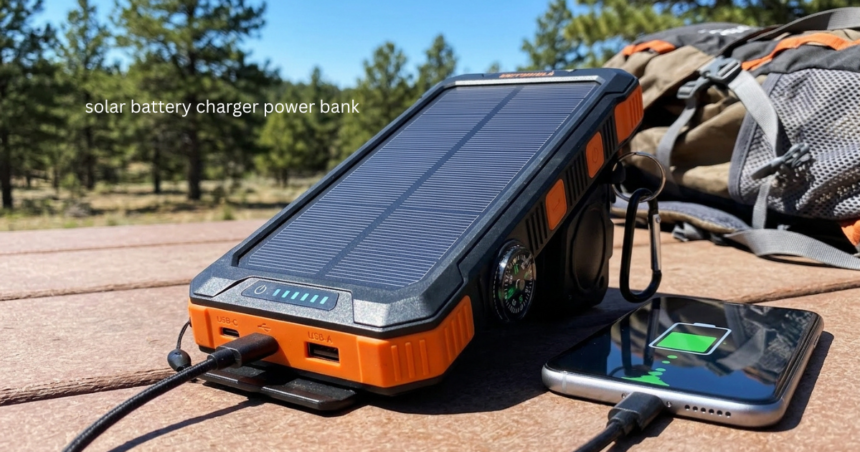
A solar battery charger power bank gives you a convenient way to keep phones and other small devices powered when you are away from a mains socket. Unlike a standard portable charger, it can use sunlight to add energy to its internal battery. This makes it useful for camping, hiking, travelling, emergencies and outdoor activities. However, buyers in the UK should understand an important point: the small solar panel on a power bank usually works as a backup charging source rather than a fast replacement for mains electricity.
What Is a Solar Battery Charger Power Bank
A solar battery charger power bank combines a rechargeable battery with a small photovoltaic panel. The panel captures available light and converts it into electrical energy, while the internal battery stores that energy for later use. You can then connect a smartphone, smartwatch, wireless earbuds or another compatible USB device.
The main advantage comes from portability. You can carry the unit inside a backpack, keep it in a vehicle or take it on a camping trip without depending entirely on an electrical outlet. Many models also include USB-A or USB-C ports, battery indicators and a built-in LED light for emergencies.
How Does Solar Charging Work
Solar charging begins when light reaches the photovoltaic cells on the device. These cells produce electricity, which the charging circuit sends towards the rechargeable battery. Strong direct sunlight normally provides the best conditions, while weak daylight produces less energy.
The UK still receives useful solar energy even though cloudy weather is common. Energy Saving Trust confirms that solar panels can generate electricity on cloudy days because they can use available daylight, although direct sunlight produces stronger output.
For a small portable charger, however, the size of the panel matters greatly. A compact panel has a limited surface area, so it cannot collect as much energy as a larger folding solar charger.
Why Is Solar Charging Often Slow
One of the biggest misunderstandings about a solar battery charger power bank involves charging speed. A small panel attached to a portable battery has much less collection area than a full-size solar panel. As a result, completely recharging a large internal battery through sunlight can take a very long time.
Cloud cover, shade, the position of the panel and the season can also affect performance. UK winter conditions can reduce available sunlight because days become shorter and sunlight becomes less intense.
For this reason, think of solar charging as an emergency top-up feature. Charge the power bank from USB before leaving home, then use sunlight to add some extra energy during your trip.
Important Features to Check Before Buying
A good solar battery charger power bank should offer more than a solar panel. Check its battery capacity, USB output, charging speed, construction quality and protection features before making a purchase.
A useful model may include USB-C input and output, multiple USB ports, battery-level indicators and an LED emergency light. Some products advertise fast charging technologies such as Quick Charge 3.0 or USB Power Delivery. These features can reduce charging time when your phone supports the required standard.
Also check the physical design. A rugged construction, protective casing, carrying strap and covered charging ports can make a difference during outdoor use. A waterproof or water-resistant design can also help, but you should always check the manufacturer’s exact rating rather than assuming the product can handle heavy rain.
USB Ports, USB-C and Charging Compatibility
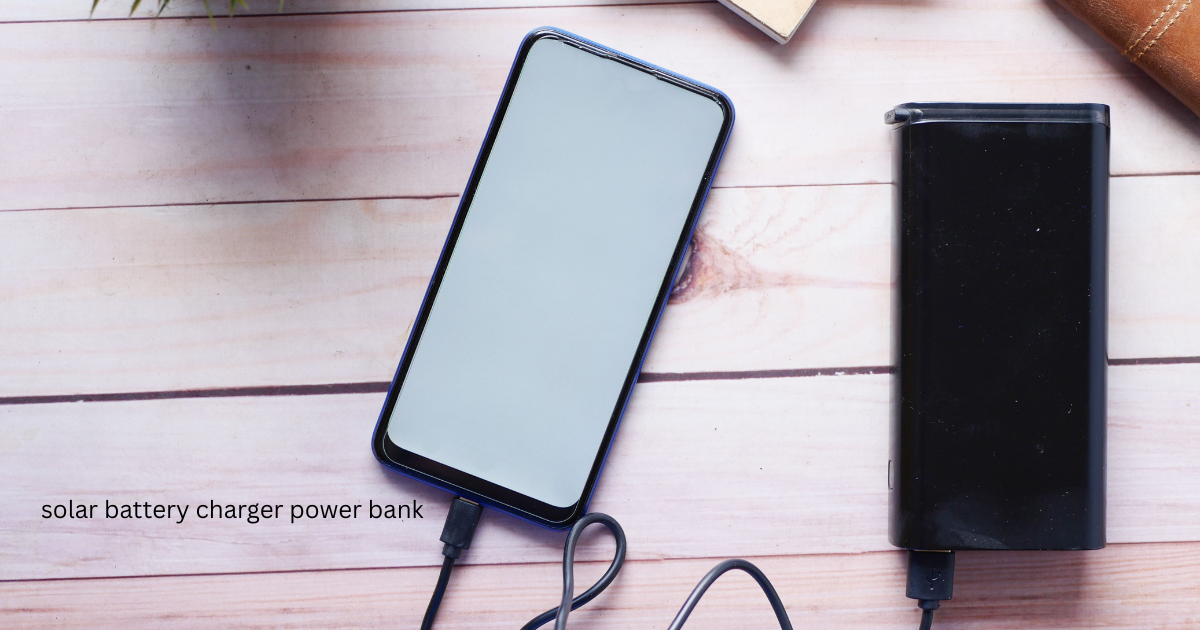
Most portable solar chargers rely on USB connections because smartphones and many small electronic devices already support USB charging. USB-A remains common, while USB-C has become increasingly useful because it can support both charging input and output on compatible products.
Before buying, check the maximum output listed by the manufacturer. A larger battery does not automatically mean faster charging. Your phone, cable and power bank must all support the required charging standard.
If you plan to charge several devices, multiple output ports can make the unit more practical. However, connecting several devices at once may divide the available power, so check the specifications rather than assuming every port provides maximum output simultaneously.
How Useful Is It in the UK
A solar battery charger power bank can make sense for UK users who spend time outdoors or want a backup source during travel. It can provide useful emergency power when you cannot reach a mains socket.
The important thing is to keep expectations realistic. A small solar panel may continue producing some electricity during cloudy weather, but its output will normally fall when available light decreases. Energy Saving Trust also notes that UK solar generation changes with daylight, weather and seasonal conditions.
For everyday home charging, a normal USB charger will usually remain quicker and more reliable. Solar charging becomes more valuable when portability and independence matter more than speed.
Best Uses for Outdoor Activities
Camping is one of the strongest use cases for a solar battery charger power bank. You can charge the internal battery before leaving home and then use the solar panel as a secondary source while spending time outdoors.
Hikers can use one to maintain phone battery levels for navigation, calls and emergency communication. Travelers may also find it useful when they spend long periods away from hotels or electrical outlets.
It can also work as part of an emergency kit. A charged power bank can keep a phone running when access to electricity becomes difficult. UK consumer guidance also recommends keeping a power bank among useful household emergency supplies.
Solar Power Bank vs Folding Solar Charger
A solar battery charger power bank offers convenience because the battery and solar panel come together in one compact unit. You can place it in a backpack and use it without carrying separate equipment.
A folding solar charger takes a different approach. Its larger surface area can collect more sunlight, so it can provide stronger solar output under suitable conditions. However, it usually does not offer the same compact all-in-one design unless you connect it to a separate battery.
Choose the power-bank style when portability matters most. Choose a larger folding charger when solar generation speed matters more than minimum size.
Battery Capacity and Charging Speed
Battery capacity tells you how much stored energy the device can hold. Manufacturers usually express portable power-bank capacity in mAh, although the usable output can be lower than the advertised figure because charging involves energy losses.
A higher capacity can provide more phone charges, but it also takes longer to refill. This becomes especially important when you depend on sunlight because a small solar panel may struggle to replace a large amount of stored energy quickly.
A sensible approach involves matching capacity with your actual needs. For a weekend trip, a moderate-capacity model may offer a better balance between weight, size and useful backup power.
Safety and Build Quality for UK Buyers
When buying a solar battery charger power bank, do not focus only on price or battery capacity. Look for clear manufacturer information, charging specifications and appropriate safety protections.
Protection against overheating, overcharging and short circuits can improve the safety of rechargeable electronics. You should also avoid suspiciously cheap products with unclear specifications or unknown sellers. Recent Which? testing found serious safety problems with some poorly manufactured USB chargers sold through online marketplaces, showing why electrical product quality matters.
A reputable seller, clear product information and a suitable warranty can provide greater confidence than an unusually low price.
How to Get Better Solar Charging Results
Place the solar battery charger power bank where it receives direct, unobstructed daylight whenever possible. Avoid leaving the panel under clothing, inside a bag or behind heavily tinted glass because these conditions can reduce the available light.
Keep the panel clean and position it towards the strongest available sunlight. During changing weather, move the charger when necessary rather than leaving it permanently in shade.
For UK winter trips, start with a fully charged battery. Treat sunlight as additional energy rather than your only charging method. This approach makes the device much more dependable.
Is a Solar Battery Charger Power Bank Worth Buying?
For the right user, a solar battery charger power bank can be a practical backup accessory. Its strongest advantages include portability, stored energy, USB charging and the ability to gain additional energy from daylight.
It may not suit someone who expects rapid solar charging every day. A conventional wall charger remains more efficient for regular home use, while a larger solar charger may work better when you need meaningful solar generation.
The best choice depends on your priorities. If you regularly camp, hike, travel or prepare for emergencies, the extra solar feature can provide useful flexibility.
Final Verdict
A solar battery charger power bank works best when you view it as a portable battery with an additional solar charging option. Its small panel can collect useful daylight, but limited surface area means solar charging usually takes much longer than USB charging.
For UK conditions, choose a model with a suitable battery capacity, reliable USB-C or USB outputs, strong construction and sensible safety features. Start every trip with the battery fully charged, then use sunlight to extend its runtime. This simple strategy gives you the convenience of stored power without depending completely on solar conditions.
FAQs
Can a solar battery charger power bank charge a phone?
Yes. A solar battery charger power bank can charge compatible phones through its USB-A or USB-C output. The actual charging speed depends on the power bank’s output, your phone, cable and charging standard. Solar charging itself may take considerably longer than charging the battery from a wall socket.
How long does a solar power bank take to charge in sunlight?
There is no single charging time because performance depends on panel size, battery capacity, sunlight intensity, temperature and weather. A small portable panel may take many hours or much longer to fully recharge a large battery. In practice, many people use solar charging as a top-up rather than the primary charging method.
Does a solar battery charger power bank work on cloudy days?
Yes, but its output usually decreases when available light becomes weaker. Solar technology can still generate electricity from daylight through clouds, but direct sunlight normally provides stronger performance. UK users should therefore expect slower solar charging during overcast weather and winter.
Is a solar power bank better than a normal power bank?
A solar battery charger power bank can be better for outdoor trips because it can gain additional energy from daylight. A normal power bank usually offers a simpler and faster charging experience when you have access to electricity. Your choice should depend on whether portability and emergency solar charging are important to you.
Can I use a solar power bank for camping?
Yes. A solar battery charger power bank can support phones, GPS devices, earbuds and other small USB electronics during camping trips. Charge the battery before leaving home, then place the solar panel in suitable daylight during the day. This gives you stored power plus an additional charging option.
What should I look for when buying one in the UK?
Look for realistic battery capacity, USB-C support, suitable output power, reliable safety protections, strong construction and clear manufacturer information. A solar battery charger power bank should also come from a reputable seller with transparent specifications. Do not choose a product simply because it advertises a very high capacity or an extremely low price.