
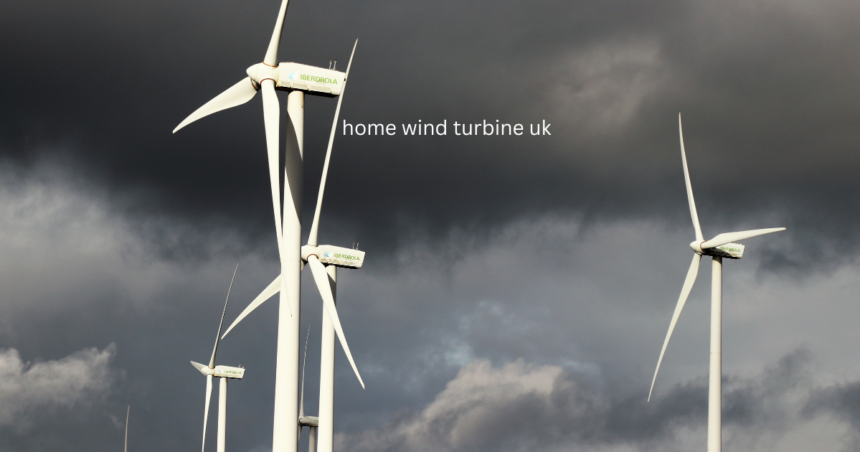
A home wind turbine uk setup allows households to produce their own renewable electricity using the power of moving air. Unlike solar panels, wind turbines can produce electricity during both daytime and nighttime when wind conditions are suitable. However, buying a turbine without checking your property first can lead to disappointing results.
The amount of wind available at your property plays a major role in determining how well the turbine will perform. A suitable property should have regular airflow with limited obstruction from trees, buildings, and nearby structures. Your location also affects the amount of electricity you can generate each year.
A home wind turbine uk installation can work particularly well in exposed rural and coastal areas. Properties in open locations often receive stronger and more consistent winds than homes surrounded by buildings. Therefore, a proper site assessment should come before choosing equipment.
Planning rules also matter. In England, some domestic turbines can fall under permitted development rights when they meet specific conditions. However, other installations require planning permission, and rules can differ across the UK.
How Does a Home Wind Turbine Work
A home wind turbine uk system uses moving air to turn aerodynamic blades. The blades rotate a rotor, which drives a generator and produces electricity. An inverter can then convert the generated electricity into a form suitable for household use.
Wind turbines come in different designs and sizes. Horizontal-axis turbines use blades that rotate around a horizontal shaft. Vertical-axis turbines use a different arrangement and can work with changing wind directions.
The electricity produced depends strongly on wind speed and direction. A larger turbine does not automatically mean better results. Your property needs enough usable wind for the equipment to operate efficiently.
Planning Portal notes that typical domestic systems can range from around 2.5 to 6 kilowatts, depending on the home and location.
Is Your Property Suitable for a Wind Turbine
Before buying a home wind turbine uk, examine your property’s surroundings carefully. Trees, houses, walls, and other obstacles can disturb airflow and create turbulence. Nearby buildings, trees, and other obstacles may disturb airflow and lower the turbine’s overall energy production.
An open garden or rural property may provide better conditions than a crowded residential area. Height can also make a difference because wind often becomes stronger and more consistent above nearby obstacles.
You should also consider the available land, turbine height, access for installation, and foundation requirements. A professional site assessment can provide useful information before you commit to the project.
Planning Portal also recommends considering average wind speeds, surrounding structures, trees, topography, and turbine position when assessing a site.
Roof-Mounted vs Free-Standing Wind Turbines
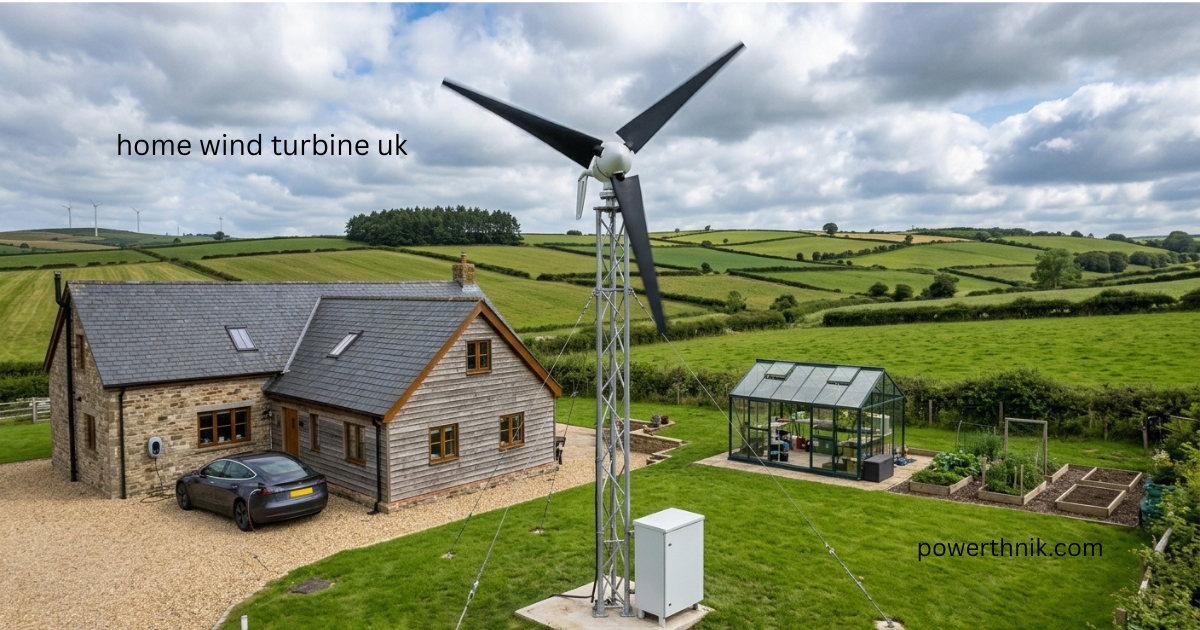
Homeowners can choose between a roof-mounted system and a free-standing turbine, depending on their property and available space. Roof-mounted models need less ground space, making them attractive for some properties. However, the roof structure must handle the turbine’s weight and forces.
Free-standing turbines require more space and stronger foundations. However, their greater height can provide access to better airflow. This design may therefore suit properties with enough land and suitable exposure.
Roof-mounted systems can be easier to fit on certain homes, but their output can remain limited by nearby obstacles. Free-standing systems usually require more planning and installation work.
Building regulations can also apply when a turbine attaches to a house. Planning Portal advises homeowners to seek suitable professional advice for structural and electrical requirements.
Home Wind Turbine UK Cost Guide
The cost of a home wind turbine uk system depends on its size, design, installation method, and location. Smaller roof-mounted systems generally require less equipment and fewer structural works.
Larger pole-mounted turbines cost more because they need foundations, poles, electrical equipment, installation, and suitable access. You should also include future servicing when calculating the overall cost.
A simple cost comparison can help you understand the investment:
| Turbine Type | Typical Size | Main Cost Factors |
|---|---|---|
| Roof-mounted | 0.4–2.5 kW | Turbine, roof work, electrical installation |
| Small free-standing | 1–2.5 kW | Turbine, pole, foundation, installation |
| Larger free-standing | 5–15 kW | Turbine, tower, foundation, electrical equipment |
These figures should not be treated as fixed UK prices. Installer quotes can vary considerably according to the property and equipment selected.
How Much Power Can a Home Wind Turbine Produce
The output from a home wind turbine uk depends mainly on wind speed. Turbine size, blade design, tower height, terrain, and exposure also influence annual generation.
For example, a small turbine may generate useful electricity on a windy property but perform poorly in a sheltered urban location. This difference explains why two identical turbines can produce very different annual results.
You should therefore look at the manufacturer’s power curve rather than relying only on the maximum power rating. A power curve shows how the turbine behaves at different wind speeds.
Local wind measurements can provide an even better indication. They help you understand whether the expected electricity generation justifies the purchase and installation cost.
Planning Permission in the UK
Anyone considering a home wind turbine uk should review the planning requirements for their location before starting the installation. Requirements vary between England, Scotland, Wales, and Northern Ireland, so homeowners should avoid relying on general advice.
In England, some domestic turbines can qualify as permitted development when they meet specific conditions. For example, current rules include limits relating to height, blade clearance, swept area, property boundaries, and location.
The Planning Portal states that a single standalone turbine may qualify under permitted development when all relevant requirements are satisfied. Listed buildings and certain designated areas can have additional restrictions.
Always check with your local planning authority before installation. The rules can also change, so current guidance matters more than older articles.
Smart Export Guarantee and Wind Power
A home wind turbine uk system may qualify for the Smart Export Guarantee, commonly known as SEG. The scheme allows eligible generators to receive payments for electricity exported to the grid.
Ofgem states that the SEG launched on 1 January 2020. The scheme covers eligible renewable technologies, including wind installations, provided they meet the relevant requirements.
Energy suppliers set their own SEG rates, contract terms, and other conditions. Therefore, homeowners should compare available tariffs instead of assuming that every supplier offers the same payment.
Using more generated electricity within your home can also reduce the amount you need to buy from the grid. Export payments can then provide an additional benefit for eligible surplus electricity.
Maintenance and Long-Term Performance
A home wind turbine uk system needs regular checks to maintain safe and reliable operation. Moving parts experience mechanical stress, particularly in locations with strong and changing winds.
Maintenance can include inspecting blades, electrical connections, bearings, mounting equipment, and other components. Batteries and inverters may also need replacement before the main turbine reaches the end of its useful life.
You should ask installers about service intervals and warranty coverage before purchasing. A clear maintenance plan can help prevent unexpected repair costs.
Long-term performance also depends on keeping the turbine correctly positioned. New buildings, growing trees, or changes around the property can affect airflow over time.
Are Small Vertical Wind Turbines Worth It?
Some small vertical turbines attract homeowners because they look compact and can accept wind from different directions. However, their advertised power rating should receive careful attention.
The available wind energy depends on the swept area and wind speed. A small rotor simply cannot capture the same amount of energy as a much larger turbine under identical conditions.
The Betz limit also places a theoretical upper limit on how much kinetic energy a turbine can extract from moving air. Real turbines operate below this theoretical maximum.
Therefore, do not choose a home wind turbine uk based only on an impressive headline power figure. Check independent performance information, the power curve, swept area, efficiency, and realistic wind speeds at your property.
Benefits and Drawbacks
One major benefit of a home wind turbine uk system is the ability to generate renewable electricity at home. A suitable site can produce useful energy throughout the year, including periods when solar generation falls.
Wind power can also reduce dependence on grid electricity. If your system qualifies for SEG, you may receive payments for eligible electricity exported to the grid.
However, wind turbines also have drawbacks. Initial costs can be high, planning requirements may apply, and unsuitable sites can produce disappointing output.
Noise, appearance, maintenance, structural requirements, and local conditions also deserve consideration. A wind turbine makes the most sense when the property offers genuinely useful wind resources.
How to Choose the Right Turbine
When selecting a home wind turbine uk system, start with your property rather than the product. First, check the average wind conditions and identify possible obstacles.
Next, decide whether a roof-mounted or free-standing design makes more sense. Consider your available space, electricity consumption, budget, planning requirements, and expected output.
Then compare turbine specifications carefully. Look at rated power, swept area, cut-in wind speed, rated wind speed, power curves, warranty, and maintenance requirements.
Finally, obtain professional advice and several installer quotes. A cheaper turbine may not provide better value if it produces little electricity at your location.
Final Thoughts
A home wind turbine uk system can be a useful renewable energy investment when the property has strong and consistent wind. However, the technology works best when homeowners assess the site before buying equipment.
The most important lesson is simple: do not judge a turbine by its advertised power alone. Real output depends on wind speed, location, turbine design, height, exposure, and installation quality.
Check planning requirements, compare costs, understand maintenance, and investigate potential SEG income. With realistic expectations and proper site assessment, a domestic wind turbine can become a practical part of a UK home’s renewable energy strategy.
FAQs
Is a home wind turbine worth it in the UK?
A home wind turbine uk can be worthwhile when your property has strong, consistent wind. Rural and exposed locations often provide better conditions than sheltered urban homes.
How much does a domestic wind turbine cost?
Costs vary by turbine size, installation method, foundations, electrical equipment, and property conditions. Smaller systems generally cost less than larger free-standing installations.
Do I need planning permission for a wind turbine?
Not always. Some domestic turbines in England can qualify as permitted development when they meet specific conditions. However, other projects need planning permission.
How much electricity can a small turbine produce?
Output depends on wind speed, turbine size, height, terrain, and exposure. A professional site assessment can provide a more realistic estimate.
Can I sell excess wind-generated electricity?
Yes, eligible renewable generators can receive payments through the Smart Export Guarantee for qualifying electricity exported to the grid.
Are roof-mounted turbines effective?
They can work on suitable properties with good airflow. However, surrounding buildings and trees can create turbulence and reduce generation.
What is better, solar panels or a wind turbine?
The better option depends on your property. Solar panels suit many homes, while a turbine needs a consistently windy site to perform well.
How long can a domestic wind turbine last?
The main turbine can provide many years of service when properly maintained. However, individual components may need repair or replacement earlier.